

Plener Candid Street Realism
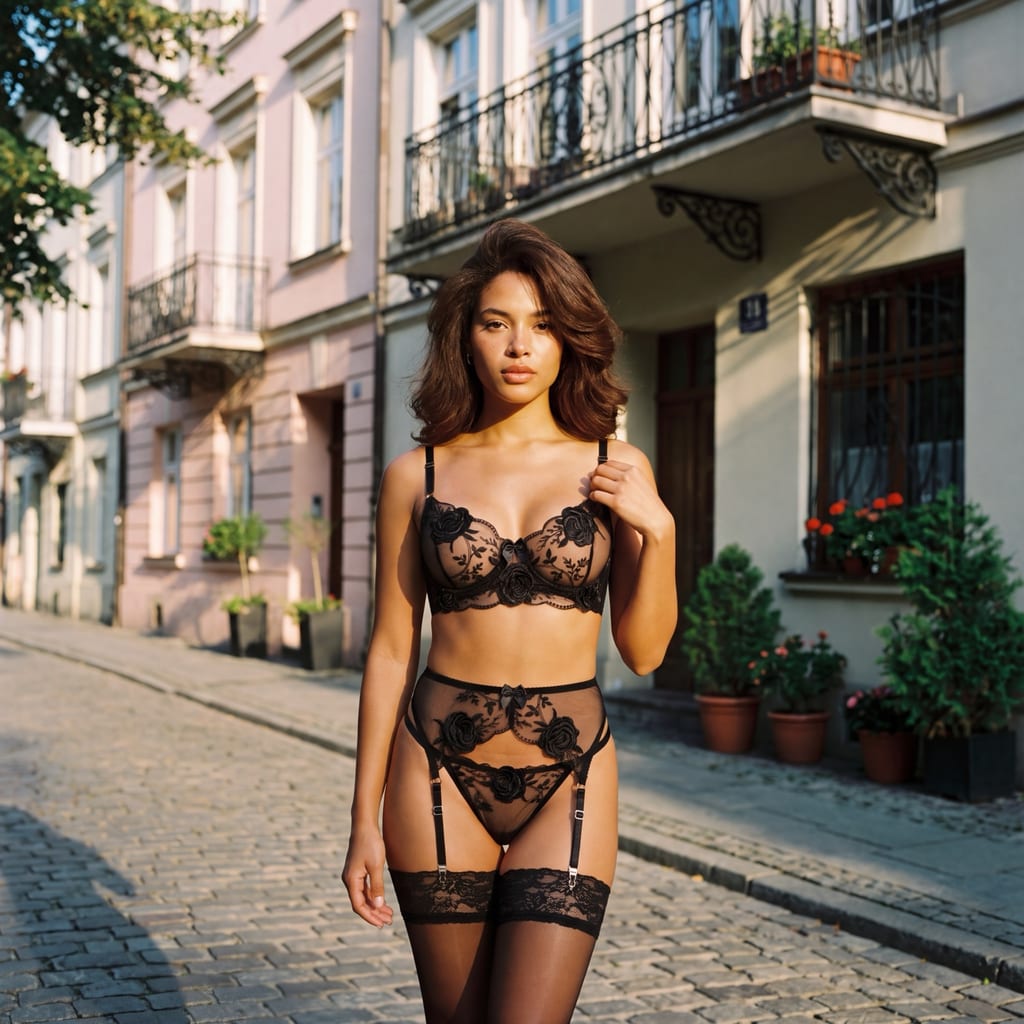
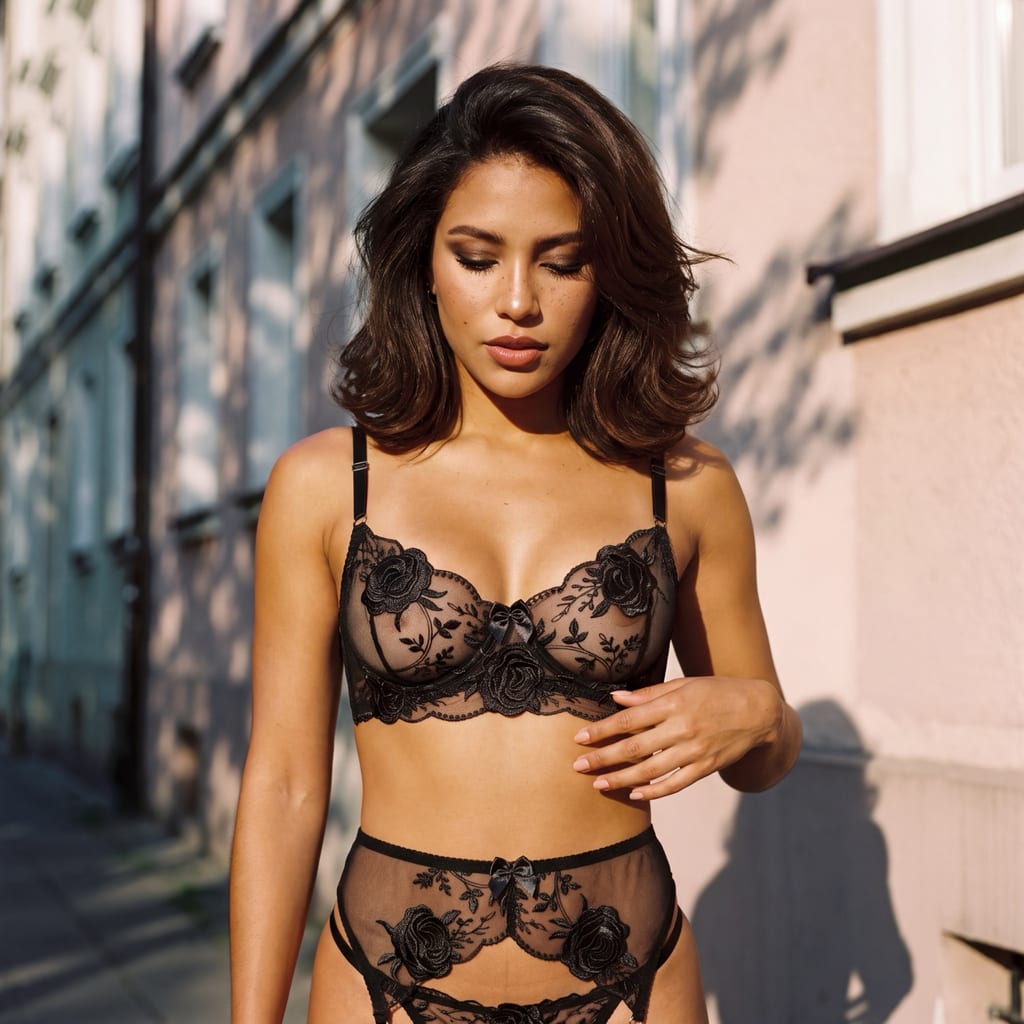
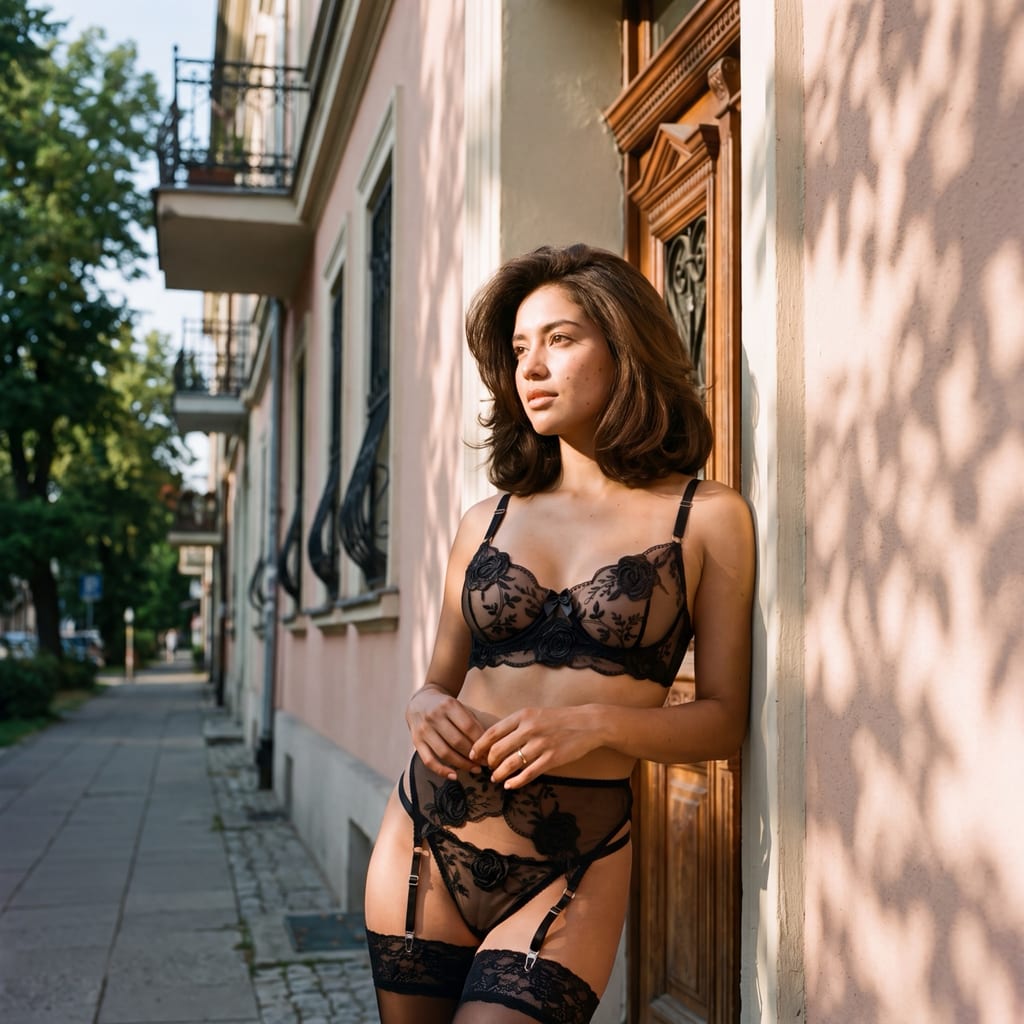
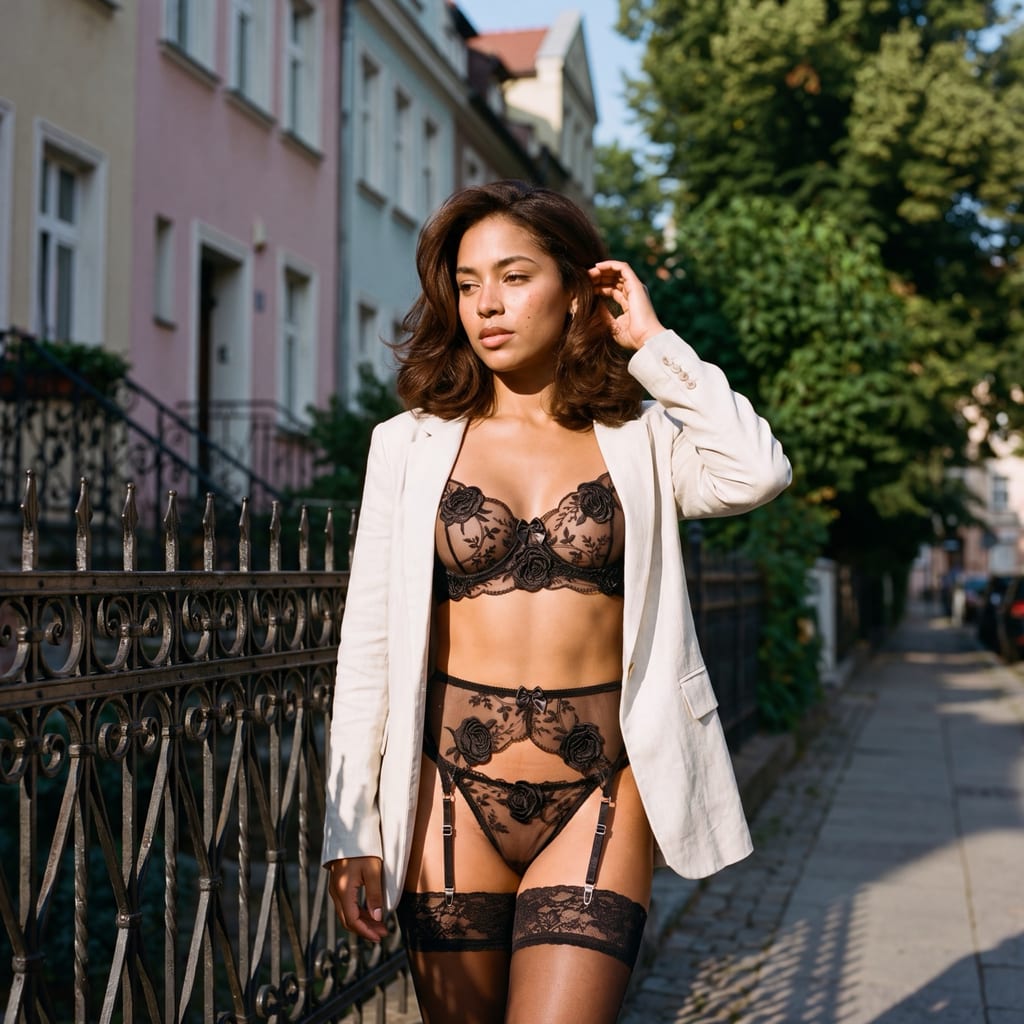
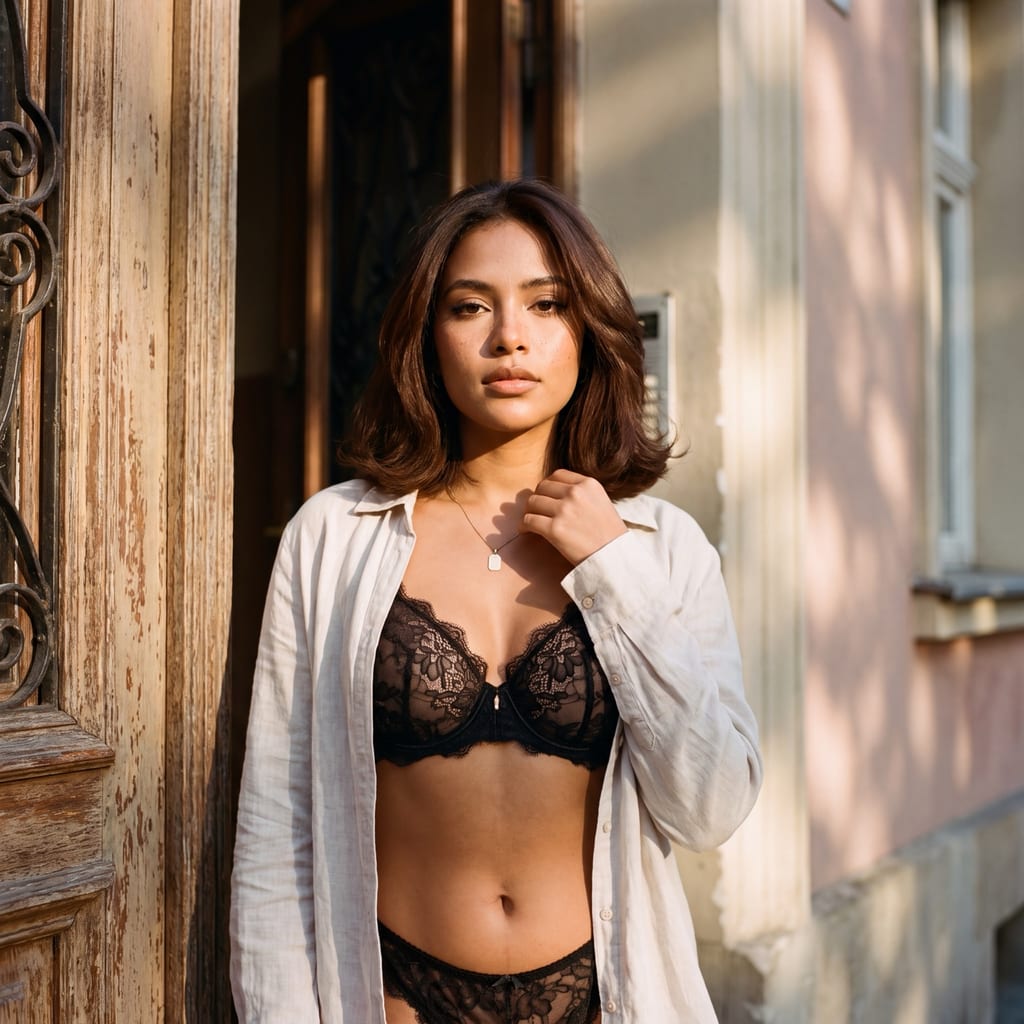
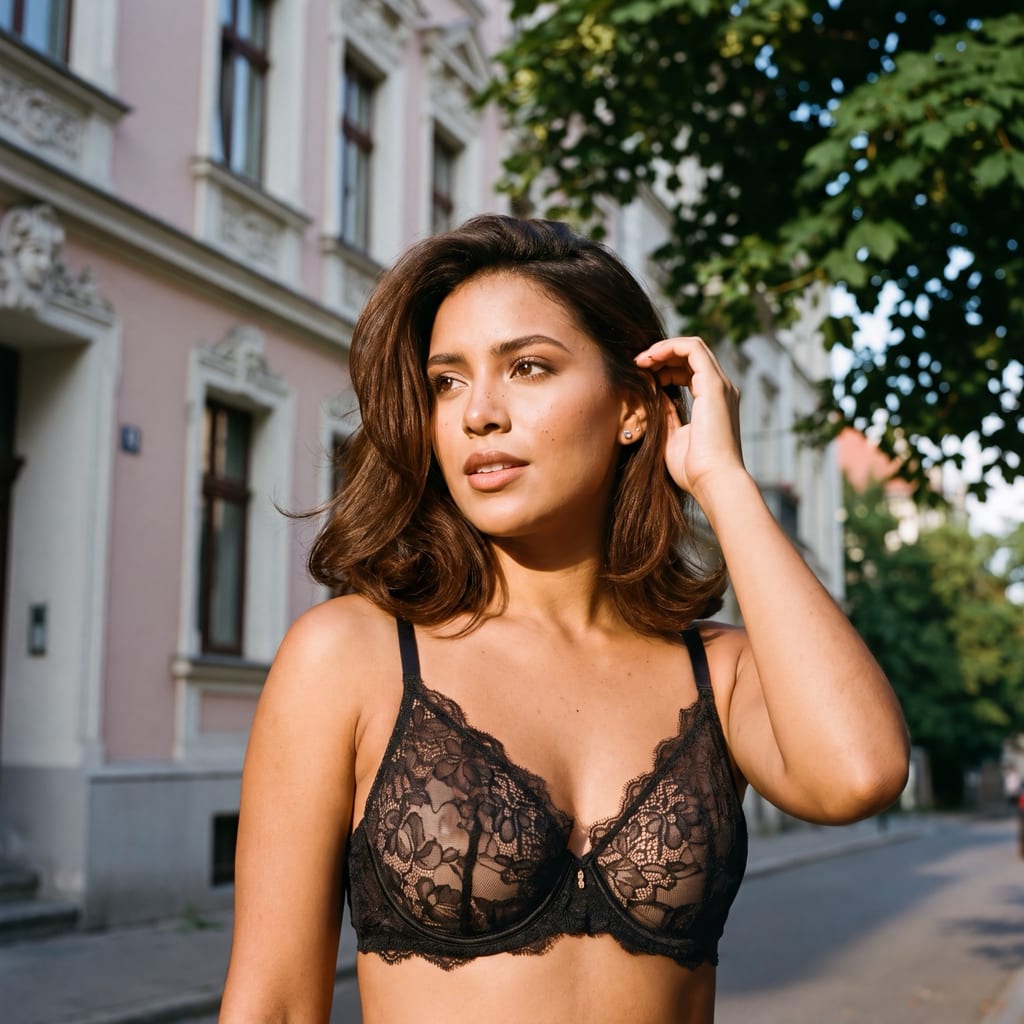
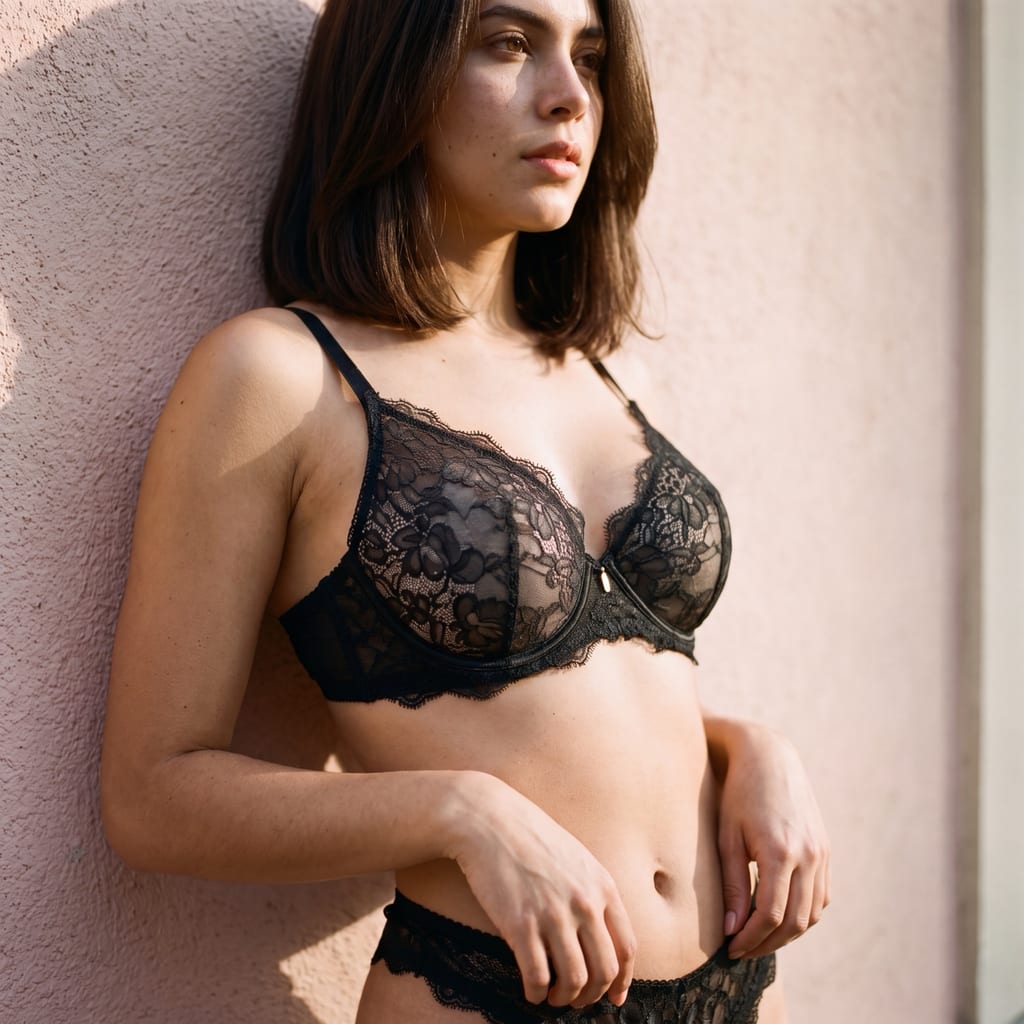
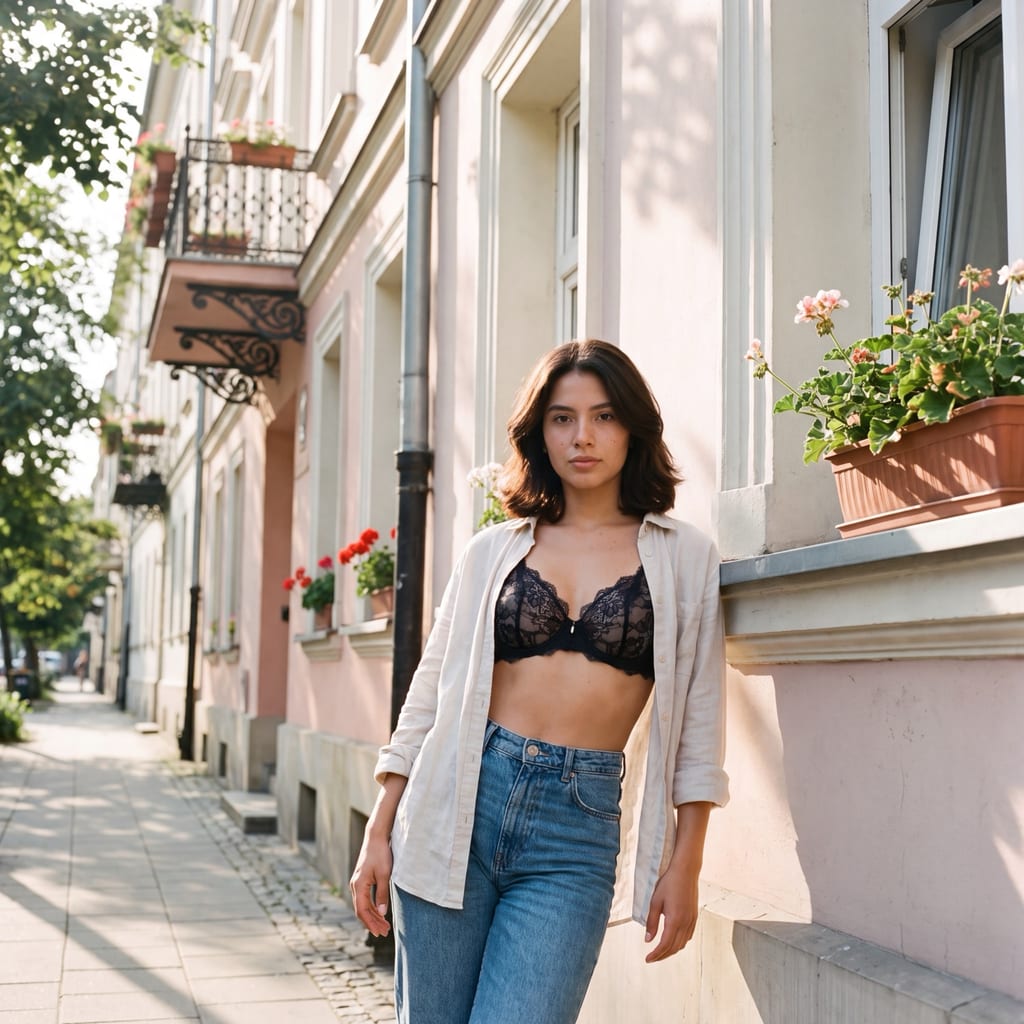
Pokaż produkt jak w prawdziwym życiu — zdjęcia, które czytają się jak fotografia uliczna albo dokumentalna, a nie sesja modelki. Autentyczna, nieretuszowana skóra, niskie grabiące światło rzeźbiące fakturę i naturalna, niepozowana sylwetka. Konkretne miejsce i tło prowadzi Twoja sceneria; styl trzyma candid rejestr, charakter światła i jedną ogniskową.
Galeria
Najlepsze do
Najlepszy dla swimwear, bielizny i apparel, gdy chcesz wiarygodności i zaufania zamiast glamouru — PDP i marketplace premium, natywny social, retargeting, kampanie zbudowane na realizmie. Zaprojektowany pod dołączaną scenerię plenerową: sceneria wybiera miejsce i tło, styl definiuje candid rejestr, niskie grabiące światło, jedną przypiętą ogniskową 85mm i nieretuszowaną skórę.
Wymagania wejściowe
Wybieraj produkty, które zyskują na autentycznym, „noszonym naprawdę" ujęciu. Modelkę (karnację, etniczność, budowę, niedoskonałości skóry) ustawiasz w modelce — styl jej nie wygładza. Podaj plenerową scenerię jako tło i miejsce — styl dopasuje do niej charakter światła i jej nie nadpisze. Bez scenerii dostajesz prosty plener pod domyślnym niskim grabiącym słońcem.
Wytyczne jakościowe
## Quality guidelines ### Style core A candid, documentary outdoor (plener) style for swimwear, lingerie and apparel — images that read like a real street-photography or documentary photograph of a person who happens to be wearing the product, not like a staged model shoot. The register is the point: a candid street-photography portrait of a stranger caught in real light, true-to-life, unretouched. The world is open-air and lit by low, directional, texture-sculpting daylight; the specific place is NOT fixed by the style (it is the scenery input) — what the style fixes is the candid register, the raking-light character and one pinned focal length. Believability leads over polish: real, textured skin, natural un-posed body language, film-stock color. This is decidedly NOT a magazine / editorial register and NOT a glamour beauty shot — the whole value is anti-plastic authenticity, "this photo could have been taken by chance on the street". Premium here comes from realness and trust, never from retouch, candy glamour or beauty glow. - Commerciality level: mix of `lifestyle` and `catalog` — natural, believable, everyday, but still readable and sellable as a product frame - Dominant character: candid, documentary, natural, unretouched, believable, grounded, warm-analog, anti-plastic - Image priority: realism and believability of the person and skin LEAD the feel; the product stays readable and worn-in-real-life in the clear majority of frames - Directional references: candid street photography, unretouched documentary portrait, 35mm analog film reportage, a true-to-life photo of a stranger met on the street; NOT a beauty campaign, NOT an editorial spread - Style-anchoring words: candid street-photography, true-to-life, unretouched documentary, real textured skin, low raking daylight, believable stranger, never editorial, never retouched, never glamour ### Product role in frame The product (swimwear / lingerie / apparel) is worn as if in real life and stays readable in the majority of frames — fit, cut, fabric and how it actually sits on a real body must read, because the style still serves a sales purpose. Unlike a hero catalog stand, the garment reads as genuinely worn by a real person caught candidly, not presented. The body and the candid moment carry the frame; the product is the believable subject on that body. When the input shows the back of the product, the back of the garment is the readable subject and the person is caught from behind. The presentation character is natural, worn-in, honest — never clinical, never a posed glamour presentation. - Product role: hero-on-the-body, but worn candidly — the garment leads as the readable subject as it genuinely sits on a real person; the candid moment amplifies, never buries it - Visibility level: mostly readable on the body (fit, cut, fabric read), with a minority of frames where a natural gesture or crop partially obscures it, plus a material/construction detail layer - What the style exposes: real fit and drape on a real body, cut and construction (straps, cups, edges, seams, closures), fabric behavior and surface, how the product actually looks when worn day-to-day - Acceptable obscuring: moderate — the product may be partly hidden by a natural, un-posed gesture (a hand, hair, a turn) if cut and fit still read; never unreadable in the core of the pack - Product presentation character: natural, believable, worn-in, honestly sellable — never staged-glamour, never clinical catalog ### Light Default light — applied when no scenery is linked, or when the linked scenery does not name a directional light, a time of day or weather: a late-afternoon sun low over the horizon, roughly 20 degrees elevation, raking across the scene from one side; long, soft-edged shadows; the low directional light sculpts every surface detail of skin and fabric. Discipline — always, whatever the light source: the light must stay LOW, DIRECTIONAL and TEXTURE-SCULPTING — a real raking daylight character whose grazing angle draws micro-texture across skin and fabric; a real sun, real directional cast shadows, real bounce. This raking discipline is a character of the preset applied on top of whichever source wins, so it survives even a qualifying scenery that names its own direction — a linked scenery may set WHERE the light comes from, the preset keeps the low, grazing, texture-sculpting CHARACTER. - Default source (applied when no scenery is linked, or when the linked scenery does not name a directional light, a time of day or weather): a late-afternoon low sun at ~20 degrees elevation, raking from one side, long soft-edged shadows, real directional daylight - Discipline (always, whatever the source): low, directional, texture-sculpting daylight — the grazing angle sculpts every surface detail of skin and fabric; real sun, real directional shadows, real bounce - Shadow quality: long, soft-edged, directional — real cast shadows that graze the surface and reveal texture; never a flat sourceless glow, never a studio cutout - White balance: follows the resolved light source; the preset's warm late-afternoon daylight white balance applies only when the preset's default light is the source; the grade never recolours an attached scenery - What the light should model: skin micro-texture and real surface first (the raking angle is the realism lever), then the product's structure and fabric, then depth - Contrast: medium — directional modeling from the low sun, readable open shadows; the raking angle carries the texture, not crushed blacks - Anti-pattern (discipline, not a value): warm, soft, directionless golden-hour light HARMS skin realism — it lifts the micro-shadow the raking angle creates. The daylight may be warm in COLOR (film-stock warmth), but it must stay LOW and DIRECTIONAL, never a soft sourceless warm wash. ### Color and tonality True-to-life, analog-film tonality — the natural color of Kodak Portra 400 with accurate, healthy skin tones, a warm-but-believable daylight balance and soft filmic contrast. This is documentary color, not a fashion grade: nothing pushed, nothing muted-premium, nothing synthetic. Unlike an enclosed studio, this style fixes NO background tone: the background is the outdoor environment supplied by the scenery input, so its colours come from the location, not from the preset. What the preset fixes is the film-stock character: true-to-life color, warm natural daylight balance, soft roll-off in highlights, open film blacks, natural grain. The warmth is a FILM-STOCK COLOR character — it is never a licence to flatten the light into a soft directionless wash (the light stays low and raking; see `Light`). - Palette: natural, true-to-life, film-warm — real skin + product + whatever the outdoor environment brings; the Portra film character holds it together rather than a fixed backdrop hue - Background tone: NOT fixed by the preset — the outdoor setting (scenery input) carries the background; do not lock a single background color - White balance: follows the resolved light source; the preset's warm late-afternoon daylight balance applies only when the preset's default light is the source. The grade never recolours the attached scenery — the product's own hue and the scene's own colours stay faithful - Saturation: natural, true-to-life — Portra's restrained, believable color; never oversaturated, never fashion-muted, never desaturated lo-fi - Contrast: soft to medium, filmic — gentle highlight roll-off, open shadows; the low sun gives directional modeling without crushing - Exposure: precise, daylight-correct; highlights held with a soft film roll-off, shadows open and readable - Highlights character: warm, soft, film-clean — natural roll-off, never blown, never HDR - Shadows character: natural, open, warm — real outdoor shadow from the low sun; deep but not crushed - Blacks: open, filmic — real film blacks with a slight natural lift, not a studio cutout - Whites: warm-neutral daylight — not icy, not bleached - Overall tonal character: true-to-life analog film (Portra 400), warm, natural, documentary - Faithfulness of the product's own hue takes precedence over the film character ### Lens and perspective feel One pinned focal length: **85mm, for the whole session** — a single value, never a range. This is a deliberate divergence from the library's usual plener default (~50mm) and from the hi-fashion sibling's ~50mm feel: the realism stack this preset carries was validated outdoors at 85mm, and a pinned focal length is what keeps the model's face geometry stable across a stateless pack (a range lets a stateless Prompter re-roll a different point per frame and drift the facial features). The 85mm gives a natural, non-deforming, gently compressing portrait feel — flattering and true-to-life, separating the person from a believable environment without melting it. Depth of field medium to medium-shallow; the person and garment stay sharp, fabric readable, the outdoor background reads as a real place with natural separation. Realistic body proportions, eye-level base — the drama here is real light and a real moment, not an extreme lens or angle. - Focal length: **PIN 85mm — one single value for the entire session, no ranges** (enforced by the closed focal axis in the session Prompter; precedence Idea > preset anchor, never from the scenery — see CO#2 / FIX 5). Do not widen to a range in the final YAML. - Camera distance: medium to medium-far so the person, pose and some environment read; closer for a candid portrait / material detail — all at the same 85mm - Perspective: eye level as the base, natural and neutral — the register is a stranger met at eye level; deliberate extreme low/high angles are OFF-register here - Depth of field: medium to medium-shallow; the outdoor background separates naturally, product and fabric stay sharp - Sharpness character: organic, true-to-life analog — real detail with film character, never clinical digital plastic, never soft dreamy blur - Gear character: 35mm analog film camera (Kodak Portra 400), candid documentary feel - Aspect ratio: no rigid requirement; the prompter picks (e-commerce usually 2:3 / 4:5, social 4:5 / 9:16); the format should support a believable candid frame with some environment ### Composition language Candid, un-staged composition — the frame reads as a moment caught, not a layout planned. Placement is natural and slightly imperfect (a real reportage eye), not locked to a golden-ratio grid: the subject may sit off-centre, the horizon may be casual, the crop may feel spontaneous. One to two planes: the person against a believable outdoor backdrop with natural depth. Negative space low to medium and un-designed — the environment breathes as a real place, not as reserved copy space (a minority of frames may still leave room for copy). Separation from the background is the low raking light plus natural depth of field, not a graphic studio cut. The composition should never feel art-directed or campaign-composed — that breaks the candid register. - Frame type: leads with candid portrait / bust and 3/4-length frames (the person and the worn product), full figure a supporting share, a material/construction detail layer - Object placement: natural, candid, slightly off-centre allowed — a reportage eye, not a locked geometric grid - Negative space: low to medium, un-designed; a minority of frames may leave casual room for copy - Symmetry: incidental, not sought — real candid asymmetry - Open / closed composition: mixed — leaning slightly open and un-posed (the moment continues past the frame), with closed candid frames where the person fills it naturally - Number of planes: one to two — the figure against a believable outdoor plane; the environment supports, never narrates over the product - Separation from background: natural — low raking light plus medium-shallow depth of field; never a graphic studio cutout - Room for copy: optional, incidental in a minority of frames — never a designed campaign layout - Overall composition character: candid, documentary, reportage, un-staged, believable ### Pose language There is essentially NO posing — the body language reads as candid, un-posed and natural, as if the person were caught mid-moment and simply happened to meet the camera. No sculptural fashion shapes, no held editorial tension, no worked contrapposto: a relaxed, real stance, a natural gesture, an ordinary weight shift. The face reads with a calm, composed, real expression — a direct, un-posed gaze to camera as a stranger meeting the lens, or a natural off-camera glance — never a smized model expression, never coy glamour. Crucially, in candid framing the gaze must be given an EXPLICIT cue (a direct gaze meeting the camera / head-on) so the frame resolves to a real head-on portrait rather than drifting into a walking-away silhouette. Model identity is carried by the Mannequin input regardless of face angle. - Expression: calm, composed, real, un-posed — a stranger's direct or natural look; defaults away from model-smize, coy sweetness or glamour tension; reads whenever the face is visible - Pose dynamics: candid / un-posed — a relaxed stance, a natural gesture, an ordinary moment; NOT sculptural, NOT held editorial - Body openness: natural and relaxed — whatever a real person does when caught, not a worked fashion axis - Line tension: low — real, relaxed body line; the opposite of elongated editorial overload - Posing character: decidedly `candid` / `lifestyle` / `natural` — un-posed, believable, not camera-worked - Eye contact: mixed — a direct, composed gaze meeting the camera (given an explicit cue in portrait frames) OR a natural off-camera glance; both un-posed - Spontaneity level: high — the whole point is a caught, real moment, not a staged placement - Body-to-product relationship: the real, worn moment leads; the product stays readable on the body, never dropped below the sales floor ### Movement and physics The style is essentially still but candid — a person caught standing or between ordinary movements, not a dynamic action or a frozen fashion jump. Motion, if any, is the incidental kind of real life (a caught step, a light breeze in hair, natural fabric settling) — never a choreographed motion device and never a motion-blur effect that would break the documentary readability. The frame is sharp and believable; physics are fully real — hair and fabric behave naturally in real outdoor air, tension comes from the ordinary reality of the moment, not from worked drama. - Static vs movement: essentially still / candid-caught — a person standing or between ordinary steps, not a dynamic action pose - Frozen vs blur: sharp and believable; at most an incidental natural breeze in hair or fabric, never motion blur on the product - Hair/body: naturally moved by real outdoor air or simply at rest; believable, never chaotic, never styled-static in a fashion way - Elements: subtle and real only (a light breeze, natural fabric settling); no storm/heavy-water drama, no wind-machine effect ### Relation to scenery The style is outdoors, but the specific place is a separate user input. The style fixes that the session happens in an open-air, natural-daylight environment with believable depth; it does NOT fix a single location (beach, cove, promenade, garden, poolside are all valid and belong to the scenery input). Critically: "street" / "candid street-photography" here is a GENRE register of the PHOTOGRAPH, not an instruction to relocate the scene to a city street — the scenery input owns the actual location and must lead it. To hold this, the environment anchor must stay strong: the register describes HOW the photo is taken (candidly, documentary), the scenery describes WHERE it happens. The environment reads as a real, supporting outdoor plane, never a decorated narrative set that competes with the product. - Relationship to space: open-air, natural, believable outdoor — a real-world environment, not a studio seamless and not a fixed named place - Scene depth: layered but supporting — natural outdoor depth (near ground, midground, horizon) that separates the figure without narrating - Background activity: supporting / non-narrative — the environment frames the person and product, minimal distracting elements - Space scale: intimate to human — the register is close and real, not monumental - Background as an input: the specific outdoor location is the scenery input, not the preset; the candid/street register is a GENRE cue, NOT a relocation to a city. When a scenery is attached it owns the location and backdrop; the candid register and the low raking-light discipline apply on top. When no scenery is linked and no per-batch suggestion sets a place, the DEFAULT is minimal, unspecified natural outdoor surroundings under the preset's default low raking daylight (no locked tone, no named scene), which a linked scenery or suggestion overrides. ### Props and styling behavior The style is clean and real — it needs no props. The register is anti-glamour, so accessories are minimal and only the ordinary kind a real person would wear (a simple everyday piece), added in a small minority of frames as a session styling layer, NOT part of the base model identity (accessories baked into the model return in every frame and break the register). No fashion-glamour add-ons, no styled editorial accessories. Beauty layer reads bare and real: the candid register adds no glamour make-up or styled hairdo of its own — make-up and hair come from the casting card, while the render keeps the skin honest, un-retouched and un-beautified. - Accessories: optional / mostly minimal — an ordinary everyday piece only, in a small minority of frames; no glamour or editorial accessories - Accessories = session styling layer, not the model's identity — the model is a separate, clean input (frequency is set in Quantity) - Beauty layer: bare and real — the register adds no glamour make-up or styled hair of its own (make-up and hair come from the card); never candy-sweet, never a beauty-glow finish - Hair: naturally worn — at rest or moved by a real breeze; not a styled fashion set - Role of props: passive — a prop may sit naturally in the frame, never become its subject - Avoid (Prompter instruction, formulate final values positively): glamour add-ons, editorial styling, holiday-snapshot clutter, anything that reads staged or "produced" and breaks the candid register ### Post-production and finish Finish is true-to-life analog documentary — Kodak Portra 400 color with natural film grain, soft filmic contrast and open film blacks, as a candid, unretouched photograph. Grain is natural and present (real 35mm film grain), not a clean digital surface and not an aggressive added texture. Clarity is natural — enough for full readability of fabric, seams and construction, WITHOUT HDR, without sharpened "advertising" micro-contrast and WITHOUT any resolution/quality tokens (no 8K, no ultra-detailed, no hyper-real — those push the render toward synthetic plastic). Retouch is none: real skin with visible pores, natural texture and real features is preserved and WANTED. Skin imperfections themselves are the Mannequin's business (they live in the model card), but the preset must never weaken them — no "flawless", "smooth", "retouched" or "beauty-glow" finish. No or subtle vignette. Overall: honest, real, unretouched, film-documentary — a believable person in real light. - Grain: natural, present — real 35mm film grain (Portra 400); not clean-digital, not aggressive added grain - Texture: natural film texture; real, not cleaned up - Clarity: natural (no HDR, no sharpened advertising micro-contrast, no resolution/quality tokens) - Vignette: none or subtle - Retouch: NONE — real skin, visible pores, natural texture and features preserved; never "flawless / smooth / retouched / beauty-glow" - Skin finish: honest and un-retouched; the preset never weakens skin realism (imperfections are the Mannequin input, the preset must not smooth them away) - Overall finish: true-to-life, analog film, candid, unretouched documentary ### Style render properties - The candid / documentary street-photography register is the HARD anchor of this preset: the image must read as a real, unretouched, true-to-life photograph of a person caught candidly (a stranger meeting the camera), NOT a staged model shoot, an editorial spread or a glamour beauty frame. The words candid / documentary / unretouched / true-to-life define the world; the register editorial / retouch / model-photoshoot / beauty-glow is off-register and must not appear (Prompter instruction — final values are stated positively). - Light must read as LOW, DIRECTIONAL and TEXTURE-SCULPTING — a raking late-afternoon character (~20 degrees elevation by default) whose grazing angle draws micro-texture across skin and fabric. This raking discipline applies on top of whichever light source is resolved (a linked scenery may set the direction; the low, grazing, texture-sculpting character stays). Never a warm, soft, directionless golden-hour wash — that lifts the micro-shadow and kills skin realism. - Focal length is PINNED at 85mm for the whole session — one single value, never a range — so the model's face geometry stays stable across a stateless pack. Enforced by the closed focal axis in the Prompter (precedence Idea > preset anchor, never from the scenery). - Skin must read as real, human, unretouched skin with visible natural texture — pores, faint texture, real micro-features — and NO retouch. The preset never smooths, "flawless-es" or beauty-glows the skin. Skin tone, complexion, body type and the specific imperfections are the Mannequin input, not the preset; the preset's job is only to never weaken them. - Film-stock character: true-to-life Kodak Portra 400 color with natural film grain and soft filmic contrast. NO resolution/quality tokens (no 8K, ultra-detailed, HDR, hyper-real) — they push the render toward synthetic plastic and break the register. - The product (swimwear / lingerie / apparel on the body) stays the believable, readable subject in the majority of frames — fit, cut, fabric and construction must read as genuinely worn; the candid moment amplifies, never obscures it, and the environment never competes with it. - Body language reads as candid and un-posed — a real, relaxed stance and natural gesture, not sculptural fashion posing; expression is calm, composed and real, with a direct or natural gaze rather than a model-smize or coy glamour. - "Street" is a GENRE register of the photograph, not a relocation — the scenery input owns the actual location; keep the environment anchor strong so the candid register does not drift the scene into an unrequested city street. - The film character applies to the whole scene but must NOT falsify the product's own hue (the garment keeps its color identity), and never recolours a linked scenery. - Overall the image must feel like a true-to-life, unretouched, candid documentary photograph of a real person in real low raking daylight — believable and honest — not a beauty campaign, an editorial frame, a glamour glossy or a synthetic hyper-real render. ### Allowed variability Variability applies only to the open axes. What stays disciplined across frames is the preset's OWN discipline: the candid/documentary register, the low raking-light character, the pinned 85mm focal length, the true-to-life Portra film character and the un-retouched skin realism — these hold across the whole pack. The light's SOURCE direction and the specific outdoor location are set by a qualifying scenery input (a scenery that names a directional light, a time of day or weather) and otherwise fall to the preset's default — so those two are not preset anchors, but the low grazing CHARACTER and the 85mm pin always are. - The exact candid stance, natural gesture, weight shift and micro-moment may vary — a relaxed stand, a caught step, a hand in the hair, a natural turn — as long as they keep the un-posed candid register and the product-readability floor. - Head and face angle may vary (frontal, three-quarter, natural glance); in portrait frames the direct gaze keeps its explicit cue. Model identity is carried by the Mannequin input regardless of face angle. - Frame / crop (candid portrait ↔ 3/4-length ↔ full figure ↔ material detail) and micro-composition may change — but always at the pinned 85mm. - Gaze direction may change (direct composed / natural off-camera / down along the body line), as long as it stays un-posed rather than model-worked. - The exact outdoor setting comes from the scenery input and may differ. The light's source direction follows a qualifying scenery or a per-batch suggestion; without one it falls to the preset's default low raking sun, and the low grazing texture-sculpting character applies on top of whichever source wins. - The presence of an ordinary everyday accessory may appear and disappear between frames (session layer, a small minority of the pack). - The degree of partial product obscuring may vary within "still readable in the core of the pack". - What may NOT vary: the focal length (pinned 85mm, no range), the candid register, the low raking-light character and the un-retouched skin realism. ### Session-level consistency Across the whole pack the constants are the STYLE DNA repeated in every frame (because the Prompter is stateless): the same candid / documentary street-photography register, the same low raking-daylight character (~20° by default), the SAME single pinned focal length (85mm — never widened between frames), the same true-to-life Portra film character with natural grain, and the same un-retouched, real, textured skin. One light, one focal length, one register for the entire session — this is what keeps the model's face and the series believable and coherent. The light's SOURCE direction and the specific location come from the scenery input for the whole session (one scenery input per session keeps them coherent); when no scenery is linked, the preset's default low raking sun applies identically across all frames. The pack must not mix a candid unretouched frame with a glossy retouched one, nor drift the focal length, nor swing between incompatible light characters. Ten images must look like one real, candid documentary session of one believable person, not ten separate attempts. ### Conflict resolution Declared hierarchy — this is a realism-first, anti-plastic preset, so render believability and the candid register are raised relative to a pure catalog preset, but the product stays readable (it still sells swimwear / lingerie / apparel): 1. Realism and render believability: a true-to-life, unretouched, candid documentary image — real textured skin with NO retouch, the low raking-light character, the pinned 85mm face geometry, believable physics; the product's own hue not twisted; model identity carried by the Mannequin input. 2. Product readability on the body: fit, cut, fabric and construction read as genuinely worn in the majority of frames; the environment never buries the product. 3. Consistency of the candid outdoor world: the candid register, one low raking-light character, one 85mm pin and one Portra film grade across the pack (the series signature). 4. Any artistic or expressive accent — kept minimal and always un-staged; expression here is real, not editorial. When a linked scenery's own space conflicts with the preset's default environment, the scenery wins (below product readability, render realism and model identity, which stay higher). The preset's default low raking sun applies for sessions without a scenery, or when the linked scenery does not name a directional light, a time of day or weather; a qualifying scenery's light sets the direction, and the preset's low, grazing, texture-sculpting light character always applies on top. The 85mm focal pin and the candid register are never overridden by the scenery — only a per-batch Idea/suggestion may move them. If full product readability would fight the candid un-posed register, a minority of frames may allow natural partial obscuring — but never below the threshold where the garment stops being a recognizable, sellable subject, and never at the cost of retouched, beautified skin.
Wytyczne ilościowe
## Quantity guidelines ### Session goal By default 10 images in the pack. Main use: PDP and marketplace where believability and trust sell, natural social assets, retargeting, and realism-led campaigns for swimwear, lingerie and apparel. The pack's goal is to deliver a series that looks like one real, candid documentary session of a believable person wearing the product in real low raking daylight — true-to-life, unretouched, anti-plastic — while keeping full sales usefulness (fit, cut and fabric read). ### Shot mix About 35% candid portrait / bust (the person and the worn upper product, real expression), 30% 3/4-length / American frame, 25% full figure (the person in the environment), 10% material or construction detail. The pack LEADS with candid portrait/bust and 3/4-length (the believable person and the product as worn); full figure is a supporting share carrying the person in a real place. Product readability holds across the core; details are a product-detail layer. All frames at the pinned 85mm. When the input shows the product's back, the same shot mix reads from behind (rear bust, 3/4-length from behind, full rear figure, back-construction detail). ### Perspective mix Product orientation = input, not preset. The input always shows one side of the product — the front or the back — and that loaded side dictates whether the person is caught facing the camera or from behind. The preset does NOT redistribute or assign this (no "X% front / Y% back"); it takes the orientation from the input and only varies the camera angle within it. The distribution concerns the camera setup with the loaded side kept to the lens, all at 85mm and mostly eye level (the candid register is a stranger met at eye level): about 40% straight on (camera frontal to the loaded side — readable fit), 35% a slight 3/4 camera swing (the loaded side still readable), 15% closer to profile (as far as the loaded side stays visible), 10% a gentle, un-dramatic high or low variation as a natural accent. Extreme low/high fashion angles are OFF-register; angles must not deform proportions, rotate the figure so the loaded product side disappears, or kill fit readability. ### Gaze distribution About 45% direct, composed gaze to camera (a stranger meeting the lens — given an explicit gaze cue in the portrait frames, which also helps resolve a real head-on portrait and keeps the eyes clean), 45% natural off-camera glance (un-posed, real), 10% downward / along the body line. The direct gaze is a candid stranger's look, never a model-smize. This applies to frames where the face is visible. ### Interaction distribution About 50% candid neutral presence (the person simply standing or between ordinary movements in the space), 35% natural gesture (a hand in the hair, adjusting a strap, a caught step, a natural turn), 15% light interaction with the environment (leaning, touching a natural surface). The core of the pack is un-posed real presence, not lifestyle-narrative action and not fashion posing. ### Product visibility distribution About 45% product fully readable on the body (fit and cut read — the sales floor), 30% product on the body within a candid moment (the real gesture leads, product still reads), 15% partial obscuring from a natural gesture / crop, 10% material or construction detail. The pack leads believable-worn realism, and full readability stays a hard floor across roughly 45% of frames; the candid register never pushes the product below that floor. ### Composition openness distribution About 45% slightly open, un-posed frames (the moment continues past the frame, casual environment room), 55% closed candid frames where the person fills the frame naturally. The openness is reportage breathing room, not designed campaign copy space; closedness carries the intimate candid feel and guards fit readability. ### Safe vs expressive ratio About 55% safe (readable, sellable, PDP-grade fit in a believable candid frame), 35% expressive (stronger candid character — a real moment, a natural gesture, environmental context, but still un-posed and unretouched), 10% copy-ready (incidental casual room for a headline / logo). Expression here works through realness and the caught moment — never through fashion posing, glamour or losing the product-readability floor or the candid consistency. ### Spatial and depth mix About 55% figure against a simple, supporting outdoor plane with natural separation from the low raking light plus medium-shallow depth of field, 35% embedded in the environment with natural layered depth (near ground, midground, horizon), 10% a tighter candid portrait / detail frame where the environment falls soft. The style uses a real outdoor setting for depth, but the environment always supports the person and product — it never becomes a narrative subject of its own, and it never turns the candid register into an unrequested city scene. ### Recurring motifs or accessories frequency No mandatory props. The recurring motif is the realism stack itself: candid/documentary register + low raking daylight + pinned 85mm + real, unretouched textured skin + true-to-life Portra film character — present in 10/10 frames. The environment is whatever the linked scenery supplies (minimal, unspecified natural surroundings under the preset's default low raking daylight only when no scenery is linked); the environment is NOT the motif. A calm, un-posed real stance in 10/10; a direct composed stranger's gaze in a strong share of the face-visible frames; a natural breeze in hair or fabric in a minority of frames. An ordinary everyday accessory in at most 1–2/10 (session styling layer, never baked into the model identity). The recurring theme is realness, honest skin and real light — not add-ons. ### Energy mix About 45% calm (quiet, still, candid presence), 30% sensual (natural body awareness, real warmth — never glamour), 15% active (an incidental caught step or gesture, a light breeze), 10% stronger (a more present candid frame — a direct gaze, a fuller environmental context). Even the more present frames stay un-posed and unretouched. The pack's strength is quiet, believable, true-to-life realism — not fashion drama, not glamour, not literal action.
Rób
Podaj plenerową scenerię, żeby wybrać miejsce; styl doda candid realizm i niskie grabiące światło. Wybieraj fasony, które mają wyglądać wiarygodnie na prawdziwym ciele. Pozwól, by naturalny, niepozowany moment budował obraz, nie chowając produktu. Konkretną pozę/kadr wpisz w sugestiach — sugestie są nadrzędne. Generuj 8–10 zdjęć naraz.
Powiązane style
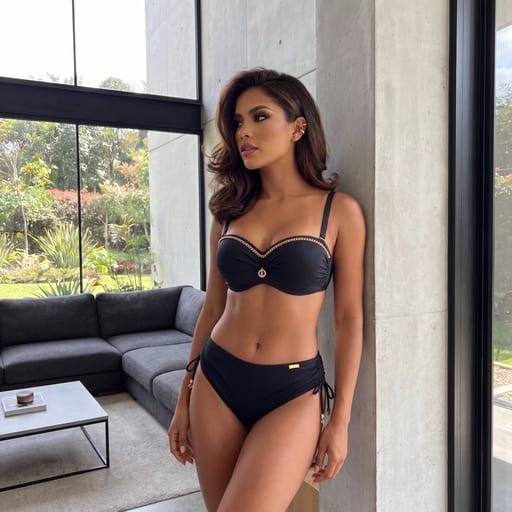
Apartment Hi-fashion Poses
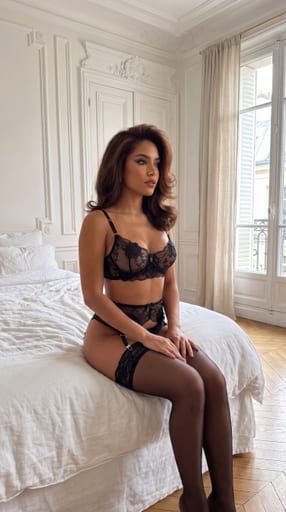
Bielizna w cichej sypialni
Spokojna, prywatna sypialnia w miękkim świetle jednego okna — rejestr quiet-luxury dla bielizny premium. Intymność bez glamouru: wyciszona poza, pozy leżące i naturalna relacja z meblem, len i blady tynk zamiast buduarowej scenografii.
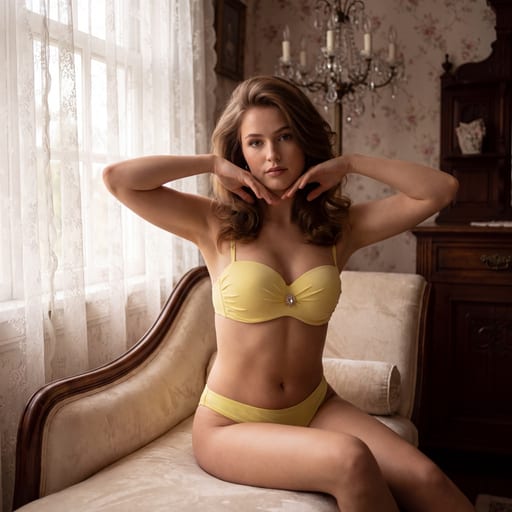
Buduar glamour
Zmysłowy glamour w klasycznym buduarze: ciepłe światło lamp, bogaty „glossy" grade obrazu i wysoka amplituda pozy budowana na relacji z meblem. Rejestr pewny siebie i zapraszający dla bielizny zmysłowej — z własnym, spójnym wnętrzem w komplecie.
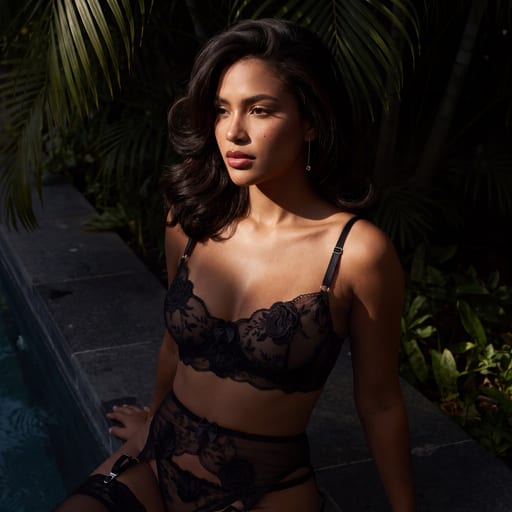
Chiaroscuro low-key
Rejestr low-key dla bielizny premium: jedno twarde kierunkowe światło, zero wypełnienia, większość kadru w głębokiej czerni. Światło wycina fragment sylwetki i wyciąga koronkę, taśmy i szwy w relief — produkt zawsze stoi w strefie światła.
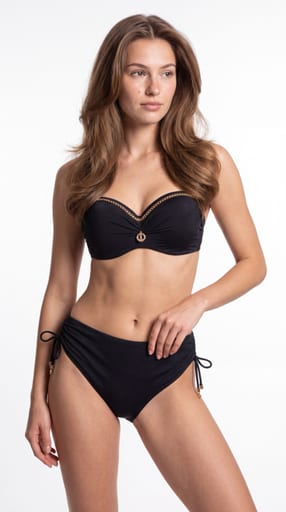
Czysty fason PDP
Czysty katalogowy styl PDP: modelka na jasnym neutralnym tle, kontrolowane światło, pół-statyczna poza. Fit, proporcje i konstrukcja produktu przed nastrojem — powtarzalna siatka zdjęć na kartę produktu.
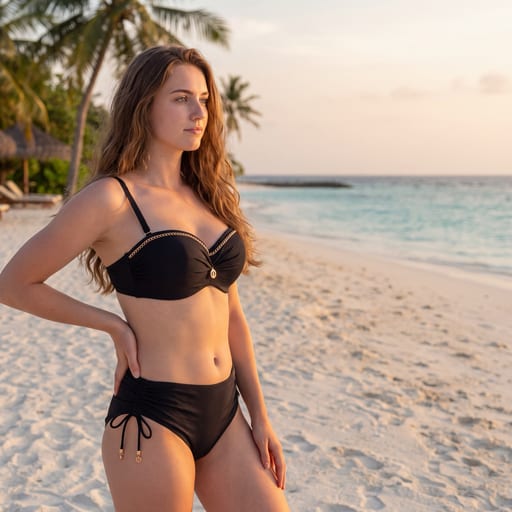
Hero z miejscem na tekst
Kadr projektowany pod layout: sylwetka po jednej stronie klatki, druga strona zostaje cicha i pusta — realne miejsce na nagłówek, CTA albo logo. Jasne, ciepłe tło studyjne, kontrolowane światło i pełna czytelność produktu w części kadru przypadającej modelce.
Gotowy, aby rozbudować swoją bibliotekę kreacji?
Dodaj ten styl do swojego konta i zacznij tworzyć lepsze kampanie w kilka minut.