

Apartment Hi-fashion Poses
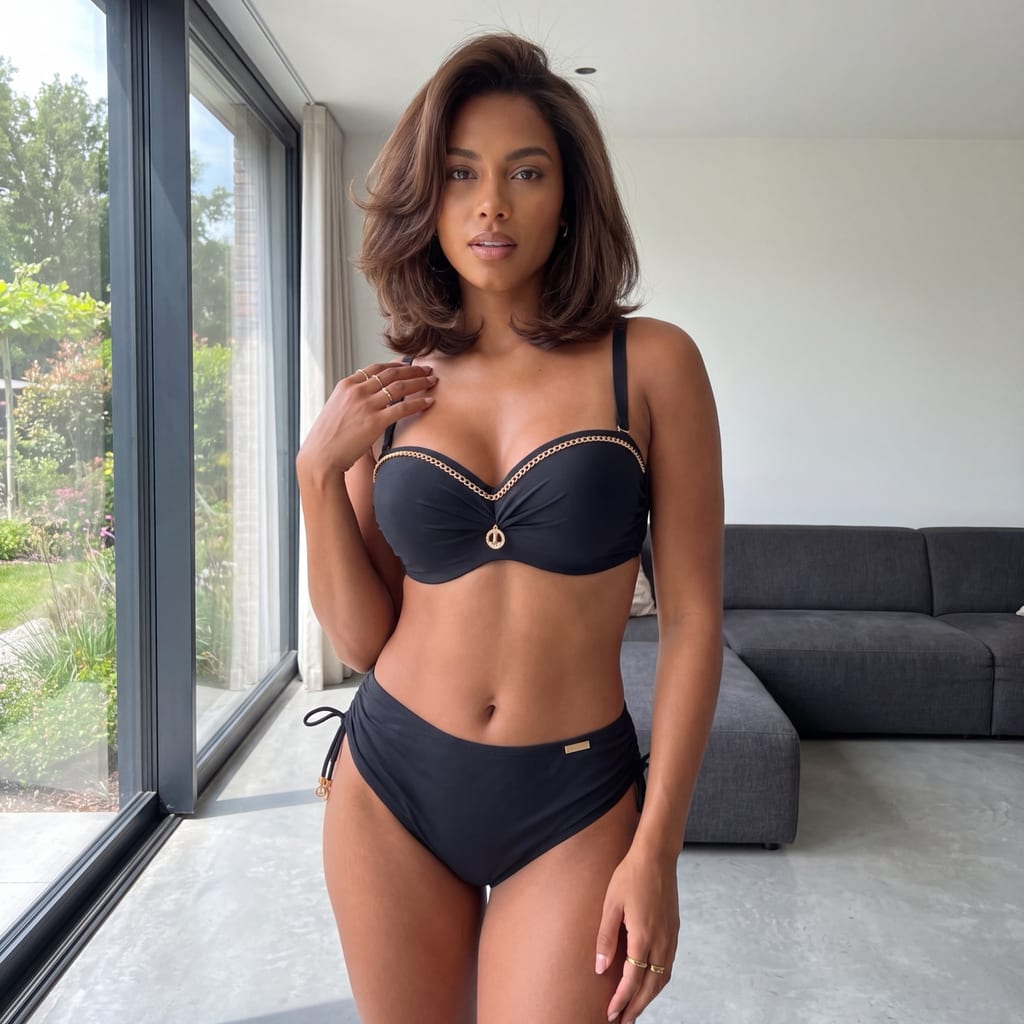
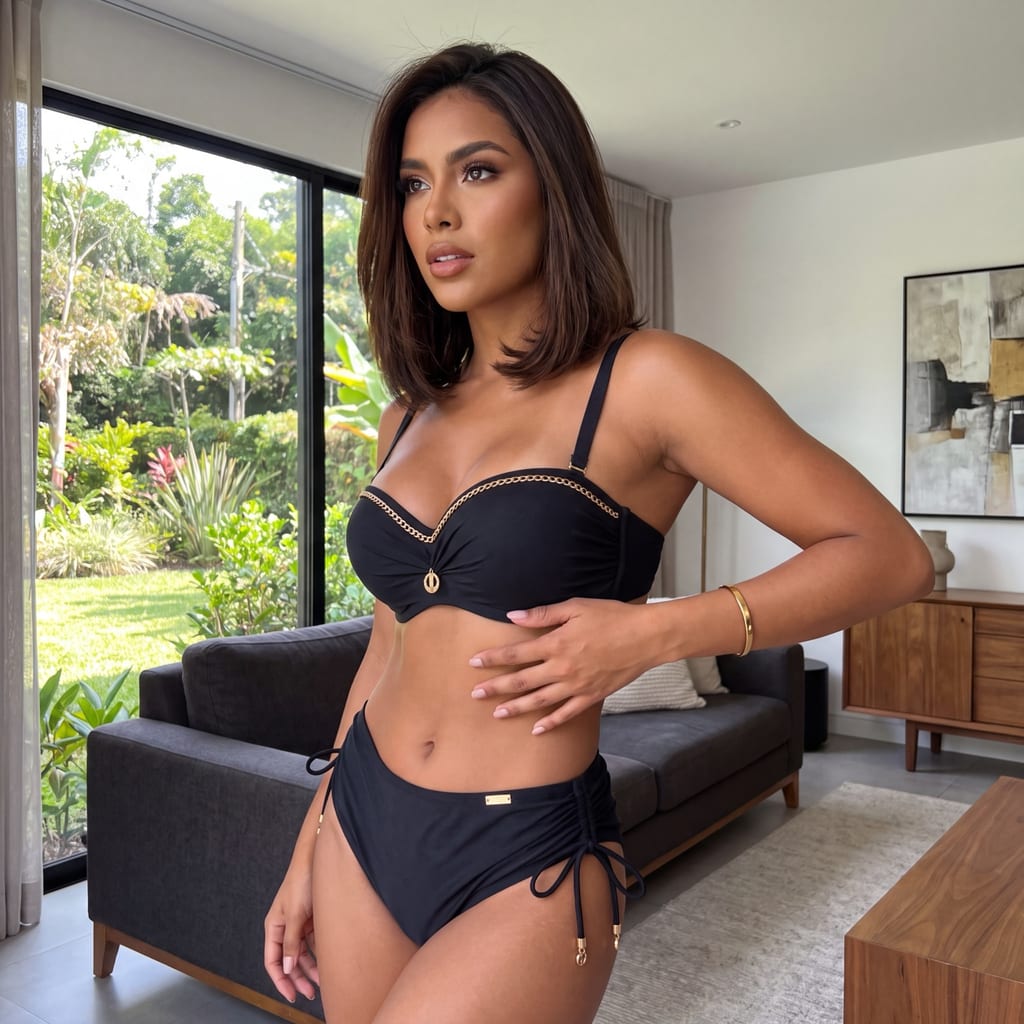
Przenieś kolekcję do prawdziwego mieszkania — jedno okno rzeźbi sylwetkę i wyciąga koronkę, głąb pokoju gaśnie tak jak w rzeczywistości, a modelka pracuje przeciw realnej ścianie i framudze. Konkretny apartament wnosi Twoja sceneria; styl trzyma światło, kamerę, kadr i modowe, dynamiczne pozy.
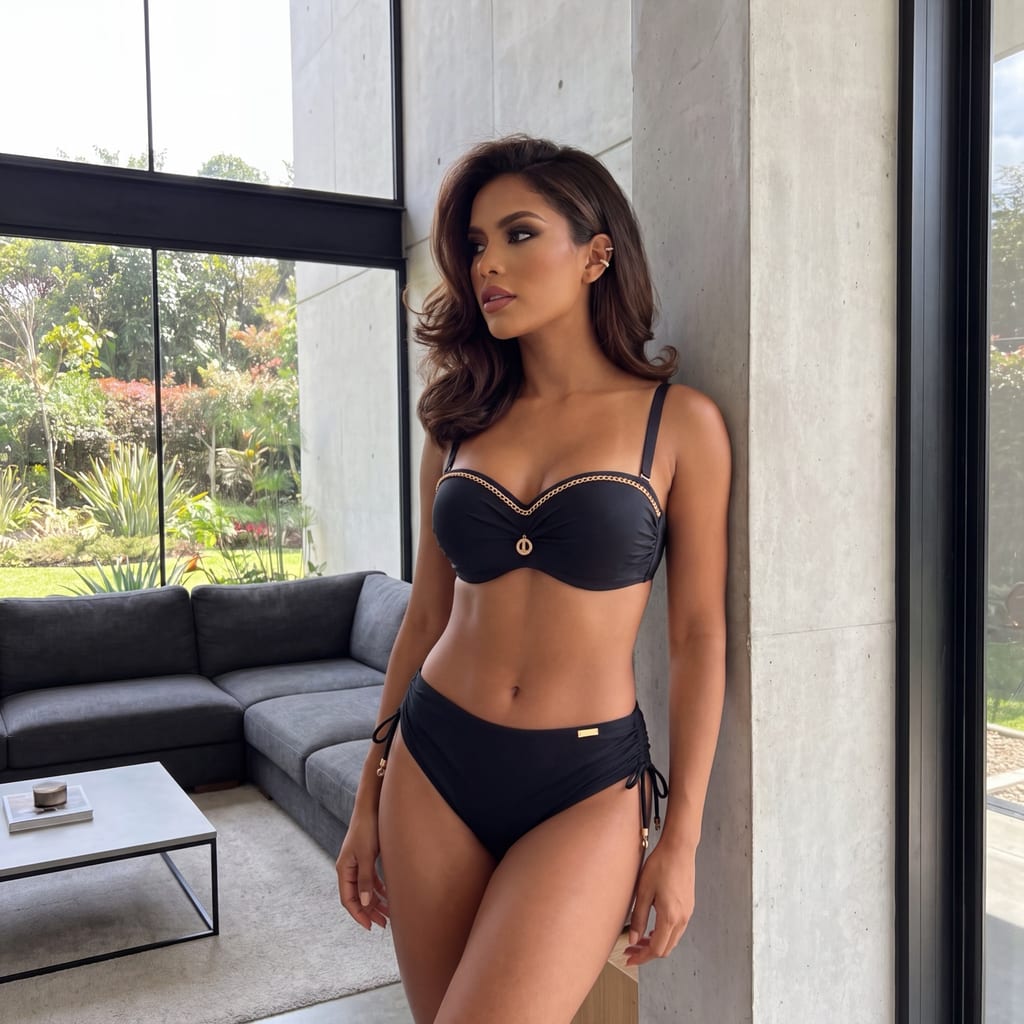
Galeria
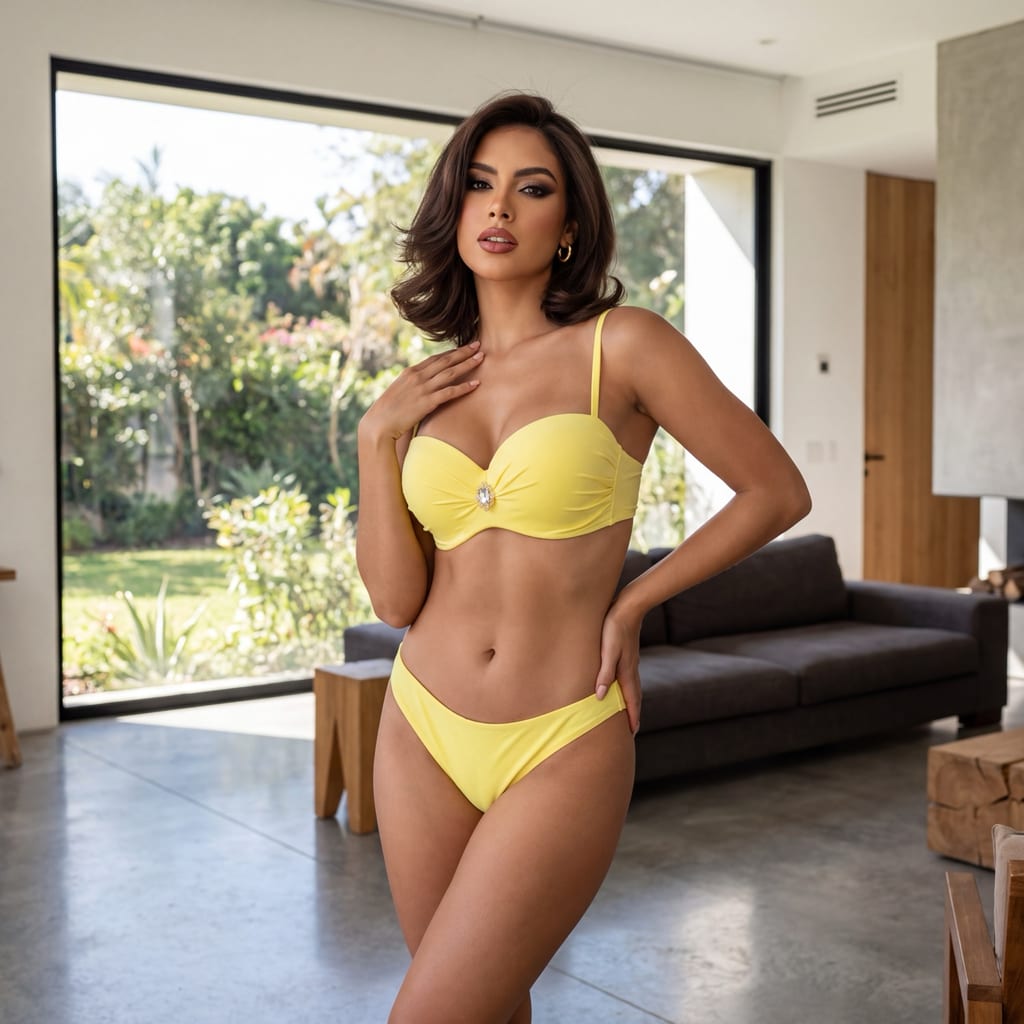
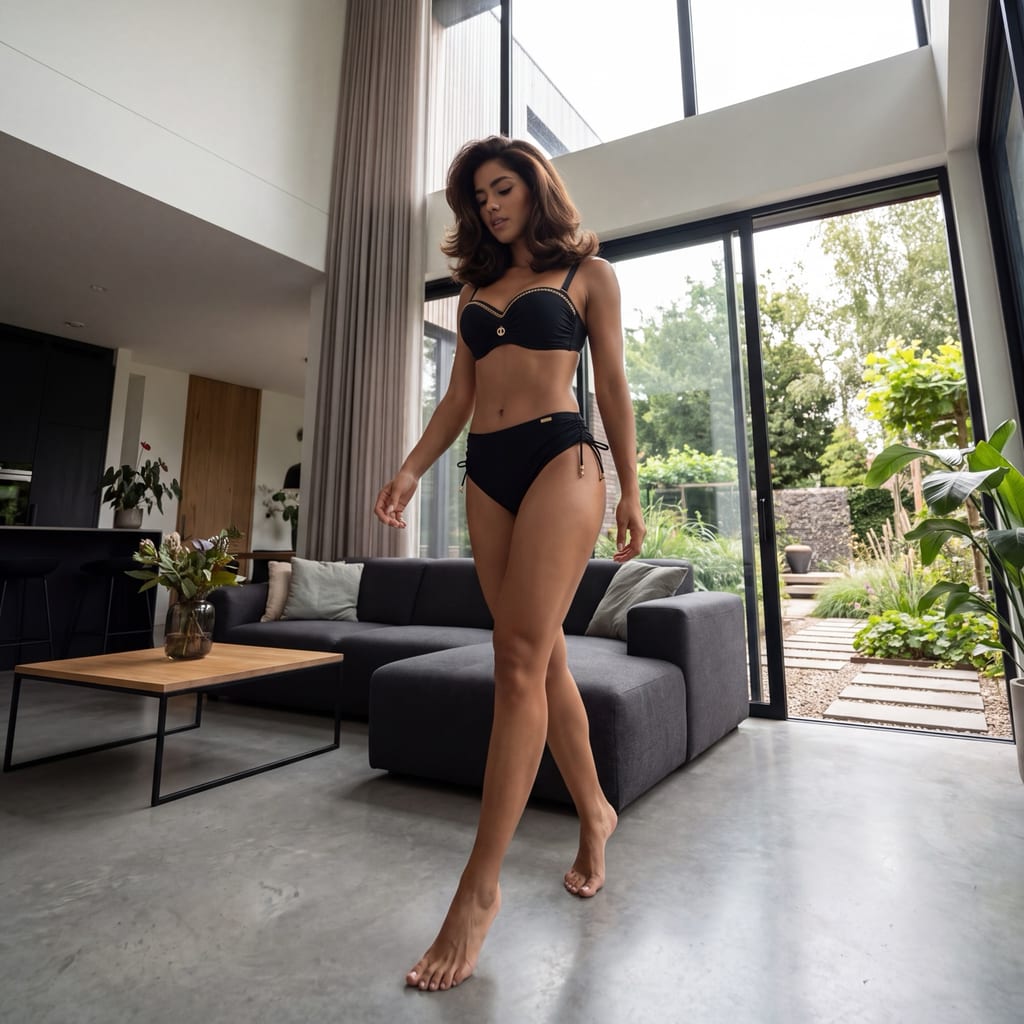
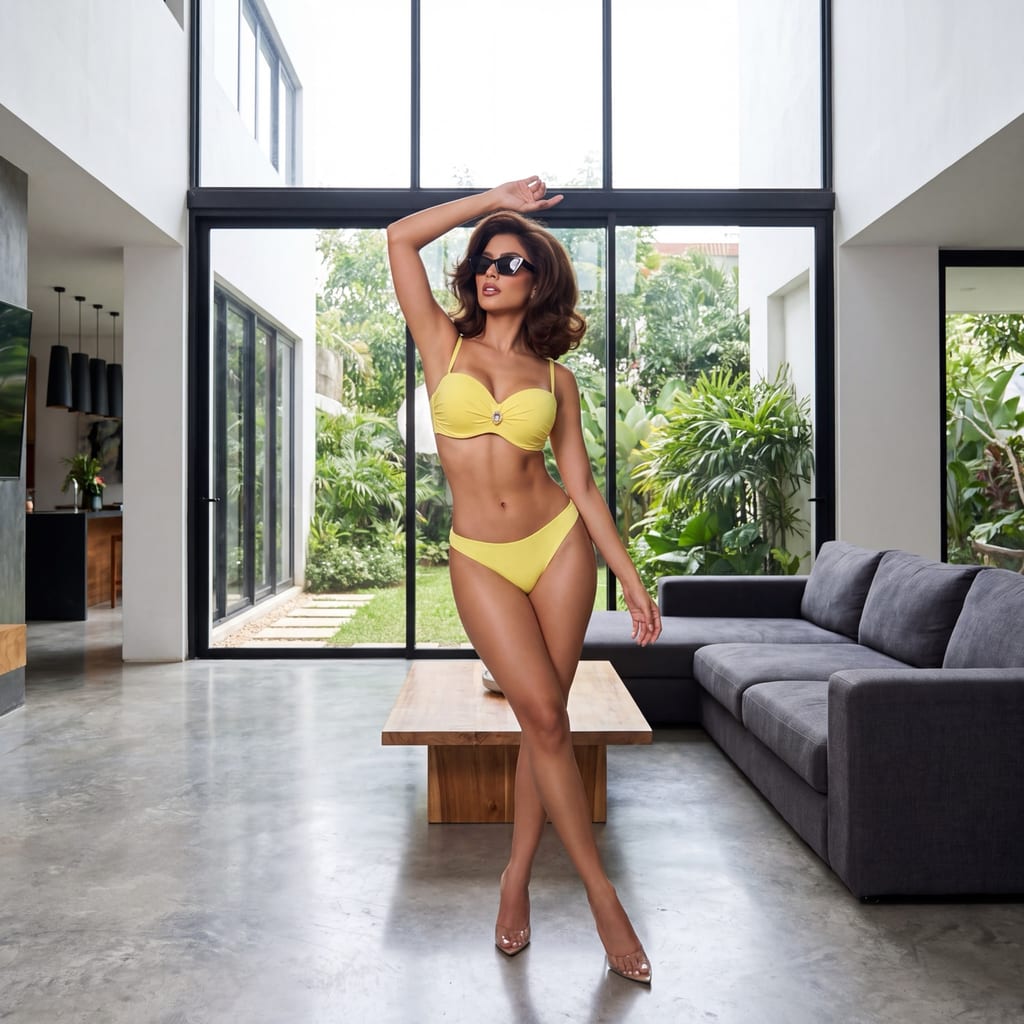
Najlepsze do
Najlepszy dla premium bielizny, loungewear i kolekcji launchowych, które chcesz pokazać w intymnym, ale mocnym modowym rejestrze — hero section, kampania, paid social, PR, lookbook. Szczególnie dobrze wypada przy fasonach, w których sprzedaje się konstrukcja: koronka, ramiączka, taśmy, szwy i wykończenia — światło grabiące wyciąga je w relief.
Wymagania wejściowe
**Sceneria apartamentowa jest OBOWIĄZKOWA — bez niej nie odpalaj tej sesji.** Ten styl świadomie nie ma tła zapasowego: nie podstawi studia, nie wymyśli mieszkania. Sceneria wnosi apartament (pokoje, powierzchnie, umeblowanie, okna), styl wnosi światło, ogniskową, głębię ostrości, grade, kompozycję i pozy. Wybieraj scenerie, które nazywają realne powierzchnie i architekturę — ścianę, framugę, okno, podłogę — bo część kadrów opiera o nie pozę. Modelkę (karnację, etniczność, budowę) ustawiasz w modelce.
Wytyczne jakościowe
## Quality guidelines ### Style core A dynamic high-fashion interior style for premium lingerie, loungewear and statement swimwear photographed inside a real, inhabited apartment — images that read like a fashion campaign shot on location in someone's home, carried by the model's own features and a powerful, confident fashion expression, while the product stays believable and sellable. The apartment itself is NOT supplied by this style: the linked scenery owns the flat, its rooms, surfaces, furnishings and windows, and a linked apartment scenery is a REQUIRED input — this style has no default room and no fallback backdrop. What the style fixes is that the session happens indoors, in one coherent domestic interior, under one dominant directional daylight source that rakes across the room and falls off into its depth. The model works standing, leaning and braced against the architecture of the flat — this is an upright, architectural register, not a boudoir session on a bed. The character is sensual yet commercial: strong editorial posing leads the energy, but the garment stays readable as a sales floor. This is decidedly a magazine / editorial register, not a plain product stand — hi-fashion posing is the point. The register comes from confident expression, the directional light and the real surfaces of the room. - Commerciality level: mix of `campaign` and `editorial`, with high fashion language over plain catalog utility, but kept clearly sellable - Dominant character: high-fashion, confident, sensual, dynamic, interior, lived-in, architectural, neutral-modern - Image priority: silhouette, expression and fashion posing LEAD the feel, with the product staying readable and believable in the clear majority of frames - Directional references: modern fashion campaign shot on location in an apartment, lingerie & loungewear editorial in a real home, window-light interior shoot, neutral art direction, golden-ratio composed frames - Style-anchoring words: high fashion indoors, one window as the only key, raking light across real room surfaces, visible falloff into the room, dynamic editorial pose, confident expression ### Product role in frame The product (lingerie / loungewear / swimwear) is worn and stays readable in the majority of frames — fit, cut, fabric tension on the body and construction must read, because the style still serves a sales purpose. Lingerie construction is the fine-detail case of this rule: lace pattern, elastic edges, straps, cups, seams and closures are what the customer buys, and the raking light exists in part to draw them in relief. When the garment's own hue sits close to the model's skin tone (nude, blush, ivory, tan), the light and the grade must preserve the edge between fabric and skin — the outline of every strap, cup, band and lace edge stays visible; the garment never dissolves into the body. The room never competes with the garment — it frames it. When the input shows the back of the product, the back of the garment is the readable hero and the model is posed from behind. The presentation character is fashion-led and aware of form, never clinical and never candy-sweet advertising. - Product role: hero on the silhouette — the garment leads as the readable subject; the body, the expression and the room amplify, never bury it - Visibility level: mostly readable on the body (fit, cut, fabric read), with a minority of frames where pose / crop / a foreground element of the room partially obscure it, plus a construction/material detail layer - What the style exposes: fit and line on the body, cut and construction (straps, cups, bands, edges, ties, closures), lace pattern and fabric surface, fabric tension, the silhouette the garment builds - Skin-to-garment separation: when the garment's hue is close to the skin tone, the directional light and the grade keep every edge of the garment readable against the body - Acceptable obscuring: moderate — the product may be partly hidden by a dynamic pose, a hair flip or a near element of the room if cut and fit still read; never unreadable in the core of the pack - Product presentation character: premium, fashion-led, confident, clearly sellable - The garment stays in the lit zone of the room: interior falloff is a compositional device, never a reason to lose the product in shadow ### Light Default light — applied when the linked scenery does not name a directional light, a time of day or weather (there is no no-scenery branch: the scenery is a required input): ONE window as the only key, off frame by default. Daylight enters from one side at roughly 70° azimuth off the camera–model axis, the window's centre just above the model's eye line, so the beam rakes along the room and along the body instead of filling it frontally (the azimuth is measured from the camera–subject axis, not from the walls; the source sits above the eyes, never as a low uplight). Medium-hard: the shadow edge is drawn and readable, with a narrow transition. The only fill is the room's own bounce off its walls, floor and textiles. Falloff is visible and physical: the model sits in the lit zone, the far side of the room is materially darker, and the light dies with distance from the window. Discipline — always, whatever the light source: one dominant directional interior source with real direction, real falloff and real bounce, grazing enough to draw relief across the body, the garment's construction and every surface the beam crosses; medium-high contrast; one single white balance per frame, following the resolved light source (the preset's neutral daylight value applies only when the default light is the source). No second key competes with the dominant source: practical fixtures named by the scenery may be visible in frame as part of the room and may add a small local accent, but the frame always resolves to one dominant source and one white balance — never a daylight-plus-tungsten mixed cast. The scenery decides where the light comes from when it qualifies — a qualifying scenery may set a night interior lit by practicals, an overcast afternoon or a low evening sun through the window — and the preset's discipline then applies on top of that source. Direct sun entering the room, with the window's own hard-edged patch falling across walls and floor, appears ONLY when the linked scenery names it (direct sun, a time of day or weather that implies it); it is not part of the default. When it does appear, the patch and the window's cast pattern read on the walls and floor of the room and never chop across the garment or cut the face in half. - Source type: daylight through one window by default, off frame; a qualifying scenery may resolve another interior source. Always one dominant directional source - Default source direction: one window at ~70° azimuth off the camera–model axis, to one side, its centre just above the model's eye line — applied when the linked scenery does not name a directional light, a time of day or weather - Hardness: medium-hard; shadows have a drawn, readable edge with a narrow transition - Light-to-shadow contrast: medium-high (discipline — raking), with pronounced relief across body, garment construction and the surfaces of the room - Role of fill: only the room's own bounce; controlled enough that the product stays readable and never falls into black - Shadow quality: graphic, drawn, controlled — relief-drawing on skin, on the garment's lace and seams, and on the room's own surfaces - Falloff: visible and physical — the depth of the room falls away from the key. This gradient is a signature of the style and stays in every frame; it is never lifted into an even ambient glow - Color temperature: the preset's neutral daylight white balance applies only when the preset's default light is the source; otherwise white balance follows the resolved light source (accurate skin tones) - White balance count: exactly one per frame; a scenery's practicals never introduce a second, competing cast - What the light should model: the relief of the room's surfaces and of the skin — every irregularity the beam crosses casts its own small shadow — then the garment's construction, then posture and pose tension - Light discipline (always, whatever the source): one dominant directional interior source, real falloff, real bounce, grazing relief, medium-high contrast ### Color and tonality Neutral, modern tonality with accurate skin tones. White balance follows the resolved light source; the preset's neutral daylight white balance applies only when the preset's default light is the source. The grade never recolours the linked scenery — the product's own hue and the apartment's own colours stay faithful. This style fixes NO background tone: the background is the interior supplied by the scenery, so its colours come from that flat, not from the preset. What the preset fixes is the grade discipline: muted, restrained saturation, medium-high contrast, blacks deep but open (interior shadow still carries the room's surface), whites clean and neutral. - Palette: neutral, limited — real skin + product + whatever the apartment brings; the grade holds the pack together rather than a single fixed backdrop hue - Background tone: NOT fixed by the preset — the apartment carries it; do not lock a single background color - White balance: one per frame, following the resolved light source; the preset's neutral daylight white balance applies only when the preset's default light is the source; the grade never recolours the linked scenery - Saturation: muted, restrained - Contrast: medium-high (discipline — supports the raking window key while the room keeps its surface) - Exposure: exposed for the lit side of the body and the garment; the unlit depth of the room may sit dark while still carrying its surface; highlights on the window wall stay held - Highlights character: neutral and controlled, including the window itself when it enters the frame - Shadows character: deep, neutral, modern; graphic while still carrying the room's surface - Blacks: deep yet open — real interior blacks, not a studio cutout - Whites: clean, neutral - Overall tonal character: contemporary, neutral, interior, high-fashion editorial - Faithfulness of the product's own hue takes precedence over the neutral grade; the grade never recolours a linked scenery ### Lens and perspective feel Short-portrait focal length, as on a real camera in a real room. One short-portrait length (around 85mm in feel) is fixed for the whole session and held identical across every frame, so facial geometry stays constant across the pack and the interior reads as a compressed editorial backdrop rather than a wide real-estate view. This is the same anchor the studio register uses, and it is deliberate: an interior scenery description pulls a loose focal length toward a wide, architectural framing, and a pinned short-portrait length is what holds that pull. A wider length is NOT the answer to a tight room — no wide-angle framing to fit a pose, no bent walls, no elongated limbs at the frame edge. Full-silhouette frames are taken along the long axis of the room, or from an adjoining room through a doorway, so the length stays honest inside a flat. A wider length (down to ~50mm in feel) is allowed ONLY when the idea explicitly calls for a full-length hero that shows the room as a whole — never as a per-frame default. Aperture / depth of field is a closed axis resolved once for the whole session: one moderately closed aperture (~f/5.6 in feel), so the room's own surface texture stays legible behind the figure while the figure still separates. This is a deliberate departure from a shallower campaign look: the room's texture is part of what makes an interior frame read as a real photograph, and melting it away throws that away. Never take focal length or aperture / DoF from the scenery. Realistic body proportions; deliberate slightly dramatic angles (from below for elongation, from above as an accent) are a fashion device, without deformation and without losing fit readability. - Focal length: one short-portrait length (~85mm in feel) fixed for the whole session and written identically on EVERY frame; a wider length (down to ~50mm in feel) is allowed ONLY when the idea explicitly calls for a full-length hero showing the whole room — never as a per-frame default. Always resolve to ONE concrete focal value per frame, never a range (never write "50–85mm in feel") - Aperture / depth of field: ONE moderately closed aperture (~f/5.6 in feel) resolved for the whole session and held identical across every frame; the room separates from the figure while its surfaces stay legible. Never sourced from the scenery - Camera distance: medium — the room's long axis or a doorway gives the distance for full-length frames; closer for face / construction detail - Perspective: eye level as the base; a slight low angle for elongation and confidence; a high angle as an accent (open axis) - Sharpness character: as a real lens renders it — neither clinical nor soft dreamy - Gear character: a full-frame camera with a short-portrait prime lens, available window light, fine film grain - Aspect ratio: no rigid requirement; the prompter picks (campaign/e-commerce usually 2:3 / 4:5, social 4:5 / 9:16); the format should support a full silhouette inside a room ### Composition language Disciplined, intentional composition planned around the golden ratio / clear geometric intent — led by the silhouette and fashion expression, with the room's own architecture supplying the geometry. Two to three planes: an optional near plane taken from the room itself (the edge of a doorframe, a curtain edge, the corner of a wall, the edge of a piece of furniture the scenery supplies) as a passive foreground, the figure, and the depth of the room behind. Centered placement or a deliberate offset (controlled asymmetry, edge framing); the straight lines of the interior — door edges, window frames, wall corners — are compositional tools and stay geometrically true, with verticals vertical and the room's perspective physically believable. The background behind the head and shoulders stays clear: no lamp, plant, frame edge or furniture line growing out of the model's head, and horizontal lines of the room do not cut the body at a joint. Negative space low to medium, with a minority of open frames left for campaign copy, usually on a wall plane. Separation from the background is tonal plus the falloff of the window key — the model sits in the lit zone, the depth of the room falls away behind her. - Frame type: leads with 3/4-length / American frame and portrait / bust (face + expression + worked attitude); full silhouette a supporting share carried by the room's long axis; a construction/material detail layer for lace, straps and seams - Object placement: centered or deliberately offset, always with clear geometric intent (golden ratio / rule of thirds) - Architectural discipline: verticals stay vertical, the room's perspective stays physically believable, the interior's lines stay straight - Background hygiene: the area behind the head and shoulders stays clear of intersecting objects and lines; the room's horizontal lines do not cut the body at a joint - Negative space: low to medium in body-led frames; larger in the minority of open campaign frames, usually against a wall plane - Symmetry: controlled asymmetry or dynamic balance; full symmetry only when the room's own architecture reinforces it - Open / closed composition: mixed, leaning closed and body-led; open breathing frames a minority for copy - Number of planes: two to three — an optional near plane from the room's own architecture, the figure, the depth of the room; the interior supports the silhouette, it does not narrate over it - Separation from background: tonal contrast plus the falloff of the window key - Room for copy: optional, in the minority of open campaign frames - Overall composition character: editorial, technically disciplined, golden-ratio aware, architecture-aware ### Pose language Posing is dynamic and high-fashion editorial — this is the point of the style. Poses suggest motion (a step across the room, a turn, a hair flip, settling fabric), build strong geometric shapes and sharp angles with the body, and are intentionally exaggerated, sculptural and often hard to hold — the body is worked into non-conventional shapes that elongate the silhouette (tiptoes, a pushed-out hip, an overhead reach, arms framing the face) and use asymmetry and imbalance (weight shifted onto one leg, a lean, deliberate tension). The interior adds one thing the studio cannot: real surfaces to work against. The body may brace on a wall, hang off a doorframe, press a shoulder into a corner, sit on the floor with a worked line, or stand into the window light — that contact is STRUCTURAL, a support and a counterforce for a worked fashion line, never a lifestyle narrative (no household action, no domestic chores, no object used to tell a story) and never a reclining boudoir pose on a bed. The garment stays readable as a floor (cut/fit still read in the clear majority), while the body and the room amplify it. Pose freedom is full — the whole range of dynamic hi-fashion posing stays available and wanted: front, three-quarter-front, profile, turning and twisting bodies, including poses from behind; the face may read frontally, in three-quarter or in profile depending on the camera azimuth and the pose. Model identity is carried by the Mannequin input regardless of the face angle, so none of this is constrained. - Expression: leads with strong, confident, self-possessed feeling, at times mysterious or faintly arrogant (defaults away from smile-as-default, sweetness or submissiveness); reads whenever the face is visible - Pose dynamics: dynamic and semi-dynamic — suggested motion (a step, a turn, a hair flip, settling fabric) and worked sculptural shapes with real body tension - Pose amplitude: the full range is wanted, from contained worked shapes up to bold editorial reaches — extended but held, arms overhead, hands framing the face, strong diagonals through the body; the register defaults to the bold end, not the contained one - Body openness: mixed — the body may twist, fold and break the classic axis to build geometry - Line tension: high — elongated limbs, strong angles, deliberate sculptural overload, confident editorial line - Posing character: decidedly `fashion` — fully camera- and form-aware; upright and architectural - Contact with the room: structural — bracing on a wall, a doorframe, a window frame, the floor or the edge of what the scenery supplies, always to build or hold a fashion line; never a domestic action, never an object used as a narrative prop - Eye contact: mixed — an intense gaze straight into the lens or thoughtfully into the distance; direct contact a strong accent - Spontaneity level: directed — looks staged and perfectly placed, but with the energy of motion, not stiff-catalog - Body-to-product relationship: the body and expression lead the narrative; the product stays readable, never dropped below the sales floor ### Movement and physics The style is dynamic-but-controlled — suggested motion is a core device (a step across the room, a turn, a hair flip, flowing or settling fabric), but the image stays sharp and believable. The frame is essentially frozen — at most a subtle motion cue in hair or fabric ends; motion blur is not the default tool and must never break product readability. Indoors there is no wind: a curtain may breathe only if the scenery supplies an open window, and even then it stays a subtle cue. Hair can be styled and stable or caught mid-flip; body and fabric physics fully believable — tension comes from a worked, sculptural body line and from real, plausible motion. Weight is real: where the body braces on a surface, the contact reads as load-bearing, the surface takes the weight, and the hand or shoulder deforms slightly against it. - Static vs movement: dynamic / suggested-motion (a step, a turn, a hair flip, settling fabric), held within sharp readability - Frozen vs blur: essentially frozen; at most a subtle blur on hair/fabric ends, never on the product - Hair/body: styled and stable or caught mid-motion; believable - Contact physics: load-bearing and believable — real weight against a real surface - Elements: indoor-only and subtle (settling fabric, a hair flip, a curtain breathing at an open window supplied by the scenery) ### Relation to scenery **Scenery is a REQUIRED input for this style.** The linked apartment scenery owns the location and the backdrop — the flat, its rooms, its surfaces, its furnishings and its windows. This preset supplies no room of its own and holds no fallback backdrop: there is no default plane, no default wall, no default tone. If no scenery is linked, the style has no world — do not substitute a studio seamless, a generic room or an invented apartment, and do not silently promote the studio register in its place. What the preset owns instead is the light discipline, the camera (focal length and aperture/DoF), the grade discipline, the composition language and the pose DNA; the scenery never supplies any of those. The space reads as a real, inhabited apartment interior, not a decorated set: lived-in, physically present, with its own surfaces (plaster, paint, wood, stone, textile) that the raking key can graze, and with the architecture (walls, corners, doorways, window reveals) that the pose can work against. Scale is intimate to human — a room, not a hall. Depth is layered and always present, because interior falloff makes depth visible whether or not the composition uses it. - Relationship to space: a linked apartment scenery leads the location and backdrop; there is NO no-scenery default - Scene depth: layered but supporting — a near plane from the room's architecture, the figure, the depth of the room falling away from the key - Background activity: supporting / non-narrative — the interior frames the figure and product; its own surface texture is visible and welcome, its furnishings stay passive - Space scale: intimate to human (a room), never monumental — this style does not do halls, lobbies or atria - Background tone: NOT fixed by the preset — the apartment carries it; do not lock a single background color - What the scenery brings: the place, the backdrop, its surfaces and architecture, and — when it names a directional light, a time of day or weather — the light source. What it never brings: focal length, aperture / DoF, render character or grade; those stay preset-owned, and the preset's light discipline always applies on top of whichever source is resolved ### Props and styling behavior The style adds no objects of its own. Everything physically present in the room comes from the scenery and stays passive — furniture, textiles, fixtures and whatever else the flat contains may enter the frame as architecture and surface, never as a narrative prop the model uses. The space itself is the texture partner of the raking light. Accessories on the model are optional and minimal: delicate jewelry, sharp sunglasses, gloves, a strong-lined shoe or a single sculptural piece — only when they support high-fashion language. Footwear is a session styling layer: bare feet read native to a flat and are the quiet default, a strong-lined heel is an editorial accent in a minority of frames. IMPORTANT: accessories are a SESSION styling layer added in a minority of frames, NOT part of the base model identity (the model is a separate, clean input; accessories baked into the model return in every frame and break the register). The preset does not set the model's hair styling, make-up or skin finish — these come from the casting card (Mannequin input) and the preset must not override them. - Objects in the room: supplied by the scenery, passive, never used narratively by the model - Accessories: optional / mostly minimal — delicate jewelry, sharp sunglasses, gloves, a single sculptural piece, in a minority of frames - Footwear: session layer — bare feet as the native default, a strong-lined heel as a minority editorial accent - Accessories = session styling layer, not the model's identity — the model is a separate, clean input (frequency is set in Quantity) - Hair, make-up and skin come from the card; the preset only asserts non-override (it does not smooth, restyle or beautify them) - Hair movement as a POSE cue stays available: hair may be caught mid-flip in a minority of dynamic frames (motion, not a hairstyle spec) - Avoid: candy-sweet add-ons, boho/lifestyle clutter, domestic storytelling objects, anything that turns the flat into a narrative set competing with the garment ### Post-production and finish Finish neutral and consistent — ready as a coherent campaign set. Neutral grade: medium-high contrast, muted restrained saturation, blacks deep but open, whites clean and neutral. Texture as the camera records it, with a fine, film-like grain present in the image — grain is kept, not wiped, because it is one of the cheapest carriers of photographic character in an interior frame. Clarity medium-high — enough for full readability of lace, seams and construction, without aggressive HDR or sharpened "advertising" micro-contrast, and without lifting the room's shadow depth in post. Retouch minimal, with preserved natural texture and features. No or subtle vignette — the darkening at the frame edge comes from the room's own falloff, not from a post effect. - Grain: fine, film-like grain present and visible on close inspection; not heavy, not wiped to zero - Texture: as recorded; the room's own surface texture stays visible - Clarity: medium-high (no aggressive HDR, no sharpened advertising micro-contrast, no shadow lift that flattens the falloff) - Vignette: none or subtle; edge darkening comes from the room's real falloff - Retouch: minimal; natural texture and features preserved - Skin: the preset does not specify the model's skin, make-up or hair; it only requires that the render not smooth away or override the skin realism and identity supplied by the Mannequin input - Overall finish: campaign-ready, believable ### Style render properties - Render character: true-to-life photographic rendering. The frame must read as a real photograph taken with a real camera in a real apartment — a full-frame camera with a short-portrait prime lens, available window light and fine film grain. Carry this into `Rendering_Style` as its own value — `True-to-life photographic rendering.` — and resolve it identically on every frame of the session. The style's register (high fashion, editorial, campaign) belongs in `Session_Concept` and `Output_Goal`; `Rendering_Style` carries ONLY the photographic character, never a genre label, never a quality or fidelity adjective. - Fine, film-like grain is present in the image and stays consistent across the pack; the frame reads as recorded, not as cleaned. - The location is ALWAYS the linked apartment scenery. This style has no default room and no fallback backdrop: never substitute a studio seamless, a neutral sweep, a generic room or an invented apartment, and never fall back to a locked background tone. The apartment's own colours and surfaces stay faithful and are never recoloured by the grade. - Light must read as ONE dominant directional interior source with real falloff — by default one window off frame at ~70° azimuth off the camera–model axis, its centre just above the eye line, medium-hard, with the room's own bounce as the only fill; the model sits in the lit zone and the depth of the room is materially darker. The raking discipline, the falloff and the medium-high contrast apply on top of whichever light source is resolved, and each frame resolves to exactly one white balance. - Direct sun and the window's own hard-edged cast pattern appear only when the linked scenery names them; when present they fall on walls and floor and never chop across the garment or cut the face. - White balance follows the resolved light source and stays accurate in skin tone; the preset's neutral daylight white balance applies only when the preset's default light is the source. Contrast medium-high; blacks deep but open, whites clean-neutral. - The product (lingerie / loungewear / swimwear on the body) stays the believable, readable hero in the majority of frames — fit, cut, lace, seams and construction must read, and every edge of the garment stays visible against the skin even when their tones are close. The silhouette, the dynamic pose and the room amplify it; the garment never disappears into the unlit depth of the room. - The preset does not specify the model's skin, make-up or hair; it only requires that the render not smooth away or override the skin realism and identity supplied by the Mannequin input. - Posing reads as dynamic high fashion — suggested motion, strong geometric/sculptural shapes, bold editorial reaches, elongation and asymmetry; contact with the room's surfaces is structural support for that line, and it reads as real, load-bearing weight. The register stays upright and architectural. This dynamic editorial energy is WANTED. It leads with confident attitude rather than a coy, smiley, sweet, submissive, stiff-catalog or campaign-melodramatic register. - Expression reads strong, confident, at times mysterious or faintly arrogant; when the face is visible the gaze is intense (direct or into the distance), rather than coy or submissive. - Interior geometry stays believable: walls, door edges and window frames stay straight, verticals stay vertical, and the space stays a room-sized apartment interior. The area behind the head and shoulders stays clear of intersecting objects and lines. - Body proportions stay believable; deliberate slight low/high camera angles are allowed as a fashion device, without deformation and without losing fit readability. - Overall the image must feel like a real fashion campaign shot inside someone's flat — confident, grown-up, physically present — not a studio frame with a wallpaper behind it, not a flat e-commerce shot, not a wide real-estate view of a room, and not a home-lifestyle scene. ### Allowed variability Variability applies only to the open axes. What stays disciplined across frames is the preset's light discipline (one dominant directional interior source, real falloff, medium-high contrast), its neutral grade, its one focal length, its one aperture / DoF and its grain character; the default light applies consistently whenever it is the resolved source and is never widened into a range between frames. The apartment comes from the linked scenery and its description holds identically in every frame — the style never re-imagines the flat, only moves the camera inside it. Everything below is open. - The exact pose, body twist, limb arrangement, suggested motion and gesture may vary strongly — steps, turns, hair flips, bracing against a surface, overhead reaches, strong contrapposto, elongation — as long as they keep the confident high-fashion attitude, the upright architectural register and the product-readability floor. - Head and face angle may vary freely — frontal, three-quarter or profile — including poses from behind. - Camera angle, height and position within the room may move: eye level as the base, deliberate low and high angles as a fashion device, and the camera may work from a different position or along a different axis of the same room. - Frame / crop (full silhouette ↔ 3/4-length ↔ bust/portrait ↔ construction detail) and micro-composition may change. - Whether a near plane from the room's architecture enters the frame, and which one, is open. - Gaze direction may change (intense direct / into the distance / downward along the body line), as long as it leads with confidence rather than coyness or submissiveness. - The presence of accessories (delicate jewelry, sharp sunglasses, a single sculptural piece, a strong-lined heel) may appear and disappear between frames (session layer, a minority of the pack). - The degree of partial product obscuring may vary within "still readable in the core of the pack". ### Session-level consistency Across the whole pack these stay consistent, because the Prompter is stateless: the same one apartment scenery input for the session, the same one short-portrait focal length (~85mm in feel) and the same one aperture (~f/5.6 in feel) on every frame so the model's facial geometry and the rendering of the room do not shift between frames, the same DNA — dynamic hi-fashion posing, real textured skin, structural load-bearing contact with real surfaces — the preset's light discipline (one dominant directional interior source, real falloff, medium-high contrast, one white balance per frame), the preset's neutral grade and the same grain character, and the same silhouette believability and product readability. Series consistency is carried by this DNA, the light discipline and the single linked scenery, NOT by a fixed background colour, which this style deliberately does not pin. The pack must read as one visit to one flat: the same apartment, the same source and direction of light, the same time of day. The attitude DNA stays constant: confident, strong, high-fashion, upright — the pack must not mix sculpted confident frames with warm, flat, sweet or smiling ones. Ten images must look like one fashion session, not ten separate attempts. ### Conflict resolution Declared hierarchy: this is a campaign / editorial preset with a mandatory scenery, so the coherence of the interior world is raised relative to a pure catalog preset — but the product stays readable (it still sells lingerie / loungewear / swimwear). 1. Realism and render believability: one believable interior light with real falloff, believable interior geometry, real textured skin with minimal retouch, load-bearing physics; the product's own hue not twisted; model-identity integrity carried by the Mannequin input. 2. Product readability on the body: fit, cut, lace, seams and construction read in the majority of frames, with garment edges holding against close-toned skin; the room and its falloff never bury the product. 3. Consistency of the interior world across the pack: one flat, one light source and direction, one grade, one focal length, one aperture, one grain character. 4. Dynamic high-fashion pose language, confident expression and campaign drama. When the linked scenery's own space conflicts with anything the preset assumes about the room, the scenery wins (below product readability, render realism and model identity, which stay higher) — the scenery is the sole owner of the location. The preset's default light applies when the linked scenery does not name a directional light, a time of day or weather; a qualifying scenery's light leads, and the preset's light discipline always applies on top. If a pose requires a surface the linked apartment does not contain, the pose gives way — the preset never invents furniture, architecture or a room feature to accommodate it. If holding the ~85mm anchor would crop the room out of a frame entirely, the frame is recomposed from further back along the room's long axis or through a doorway; the focal anchor does not bend on its own. The single exception is an idea that explicitly asks for a full-length hero showing the whole room, which resolves to the ~50mm value — one concrete value, still never a range. If full product readability would kill the high-fashion pose language, a minority of frames may allow partial obscuring — but never below the threshold where the garment stops being a recognizable, sellable subject.
Wytyczne ilościowe
## Quantity guidelines ### Session goal By default 10 images in the pack. Main use: `high fashion campaign` shot on location in an apartment, premium brand assets, `editorial hero shots`, wow social, moodboard sales assets for luxury lingerie, loungewear and launch collections. The pack's goal is to deliver a series that looks like one real fashion session shot inside one flat — confident, dynamic, physically present — while keeping full sales usefulness (fit, cut, lace and construction read). The apartment comes from the linked scenery and is the same flat for the whole pack. ### Shot mix About 35% 3/4-length / American frame (the workhorse of the pack — fit and line read while the room stays in frame), 30% portrait / bust (tight, face + expression + the upper garment), 20% full silhouette taken along the room's long axis or through a doorway, 15% construction or material detail (lace pattern, strap, band, seam, closure). Lingerie earns a larger detail share than a swim studio pack, because construction is what the customer buys. When the input shows the product's back, the same shot mix reads from behind (rear bust framing, 3/4-length back, full rear silhouette, back-construction detail). ### Perspective mix Product orientation = input, not preset. The input always shows one side of the product — the front or the back — and that loaded side dictates whether the model is posed facing the camera or with her back to it. The preset does NOT redistribute or assign this (no "X% front / Y% back"); it takes the orientation from the input and only varies the camera angle and height within it. The distribution concerns the camera setup with the loaded side kept to the lens: about 30% straight on (camera frontal to the loaded side — readable fit), 30% a slight 3/4 camera swing (the loaded side still readable), 15% closer to profile (as far as the loaded side stays visible), 15% a deliberate low angle (elongation, confidence, the room's ceiling line entering the frame), 10% a deliberate high angle (accent). Angles do not deform proportions, bend the room's architecture, rotate the silhouette so the loaded product side disappears, or kill fit readability. The direction of the light stays constant regardless of the camera setup — the window does not move between frames. ### Gaze distribution About 25% intense direct to camera (strong, non-coy), 60% off-frame / into the distance (thoughtful, independent — the interior naturally supports a gaze toward the window or into the depth of the room), 15% downward / along the body line. The intense gaze to camera works as a strong accent, not the default mode of the whole pack. This applies to frames where the face is visible. ### Interaction distribution About 35% directed neutral / sculptural posing with no contact (the body works the line in the room's space), 30% dynamic motion pose (a step across the room, a turn, a hair flip, settling fabric — suggested movement), 35% structural contact with the room (bracing on a wall, hanging off a doorframe, a shoulder into a corner, seated on the floor with a worked line, standing into the window light). Contact is a strong axis here — this is what the interior gives that the studio cannot — but it stays structural support for a fashion line, never a domestic action or lifestyle narrative. ### Pose amplitude / artistry mix About 40% contained worked shapes (a held line, weight on one leg, a hand at the collarbone or hip, a lean into a wall), 45% sculptural-extended poses (overhead reach, arms framing the face, strong diagonals through the body, a deep twist, a braced counterforce against the architecture), 15% a bold hero gesture (the most campaign-forward shape of the pack). This distribution exists to stop the pack from settling on the safe, contained end: an interior invites stillness, and stillness plus lingerie drifts into a tame, catalog register unless the bold end is explicitly demanded. ### Product visibility distribution About 40% product fully readable on the body (fit and cut read — the sales floor), 30% product on the body with emphasis on the silhouette and dynamic pose, 15% partial obscuring from pose / crop / a near element of the room, 15% material or construction detail. The pack leads editorial, but full readability stays a hard floor across roughly 40% of frames, and the room's falloff never pushes the product below that floor. ### Composition openness distribution About 35% open and breathing compositions (a wall plane or the depth of the room as air, room for campaign copy), 65% closed, body-led frames where the worked fashion line fills the frame. A short-portrait length inside a flat naturally closes the frame; the open share is deliberate and holds the copy room. ### Safe vs expressive ratio About 25% safe (readable, sellable, PDP-grade fit), 65% expressive (dynamic, editorial, sculptural high-fashion poses with strong attitude, including the frames that work against the room's surfaces), 10% copy-ready (a clean wall plane reserved for a headline / logo). Expression works through dynamic fashion pose, confident attitude and the room's own geometry — never through losing the product-readability floor or the coherence of the interior world. ### Spatial and depth mix About 35% the figure against a simple plane of the room (one wall, minimal depth, separation by falloff), 50% embedded in the interior with layered depth (a near plane from the room's architecture, the figure, the depth of the room falling away from the key), 15% a tighter face / detail frame where the room falls soft behind. The style uses the real interior for depth, but the room always supports the figure and product — it never becomes a narrative subject of its own. The falloff into the depth of the room is present in every spatial frame. ### Recurring motifs or accessories frequency No mandatory props and no props supplied by the preset. The recurring motif is the hi-fashion DNA plus the interior light signature: expressive sculptural poses + real, textured skin + one dominant directional window key with visible falloff + the real surfaces of the linked apartment + fine film grain — present in 10/10 frames. The apartment is whatever the linked scenery supplies and is the same flat in 10/10; it is the arena, not the motif. A sculptural, elongated, dynamic pose in 10/10; strong body-line tension in 8/10; structural contact with a real surface of the room in roughly 3-4/10; a readable relief of the garment's construction drawn by the raking key in at least 6/10. A fashion accessory in a small minority of frames (roughly 2-3 in 10, a session styling layer, never baked into the model identity); a strong-lined heel in at most 2-3/10, bare feet otherwise. ### Energy mix About 20% calm (still high-fashion aware — the interior tolerates stillness better than an open plener), 25% sensual (warmth of attitude, body awareness, composed — the natural register for lingerie in a private space), 15% active (suggested motion — a step, a turn, a hair flip), 40% strong / campaign (hero shots, sculptural openings against the room's geometry, powerful compositions). Even the calmer frames keep high fashion awareness and visual tension. The pack's strength is confident, dynamic high fashion inside a real, lived-in space.
Rób
Podepnij jedną scenerię apartamentową na całą sesję, żeby dziesięć zdjęć czytało się jak jedna wizyta w tym samym mieszkaniu. Jeśli sceneria nazywa porę dnia, pogodę albo kierunek światła, styl to uszanuje i dołoży swoją dyscyplinę na wierzchu. Pozwól, by modelka pracowała przeciw prawdziwym powierzchniom — to daje temu stylowi przewagę nad studiem. Konkretną pozę albo kadr wpisz w sugestiach sesji; sugestie są nadrzędne nad stylem. Generuj 8–10 zdjęć naraz.
Powiązane style
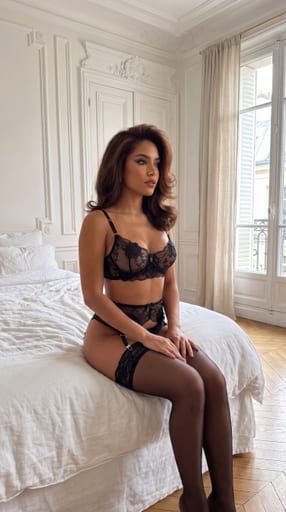
Bielizna w cichej sypialni
Spokojna, prywatna sypialnia w miękkim świetle jednego okna — rejestr quiet-luxury dla bielizny premium. Intymność bez glamouru: wyciszona poza, pozy leżące i naturalna relacja z meblem, len i blady tynk zamiast buduarowej scenografii.
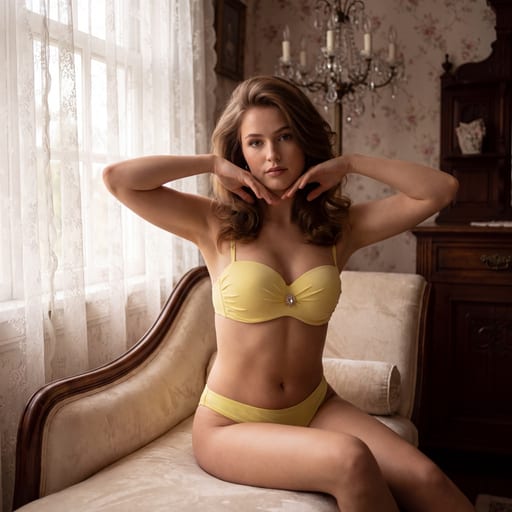
Buduar glamour
Zmysłowy glamour w klasycznym buduarze: ciepłe światło lamp, bogaty „glossy" grade obrazu i wysoka amplituda pozy budowana na relacji z meblem. Rejestr pewny siebie i zapraszający dla bielizny zmysłowej — z własnym, spójnym wnętrzem w komplecie.
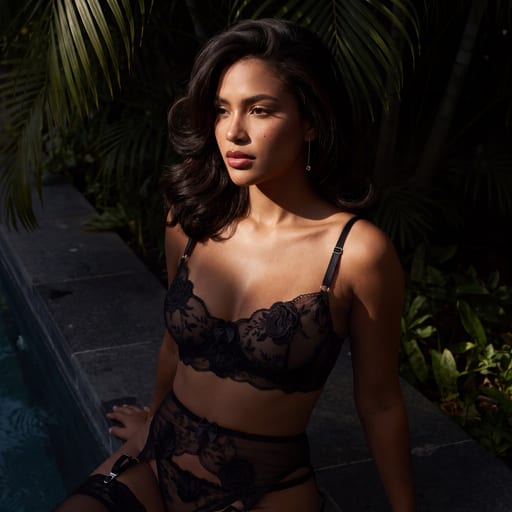
Chiaroscuro low-key
Rejestr low-key dla bielizny premium: jedno twarde kierunkowe światło, zero wypełnienia, większość kadru w głębokiej czerni. Światło wycina fragment sylwetki i wyciąga koronkę, taśmy i szwy w relief — produkt zawsze stoi w strefie światła.
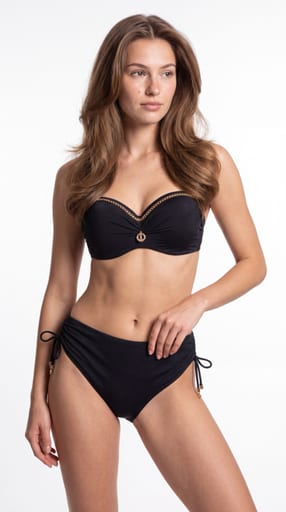
Czysty fason PDP
Czysty katalogowy styl PDP: modelka na jasnym neutralnym tle, kontrolowane światło, pół-statyczna poza. Fit, proporcje i konstrukcja produktu przed nastrojem — powtarzalna siatka zdjęć na kartę produktu.
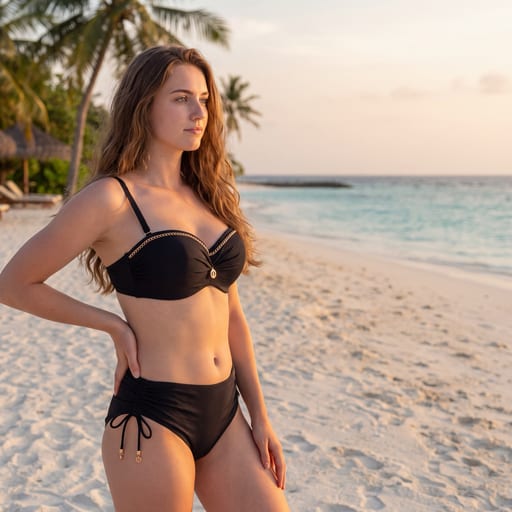
Hero z miejscem na tekst
Kadr projektowany pod layout: sylwetka po jednej stronie klatki, druga strona zostaje cicha i pusta — realne miejsce na nagłówek, CTA albo logo. Jasne, ciepłe tło studyjne, kontrolowane światło i pełna czytelność produktu w części kadru przypadającej modelce.
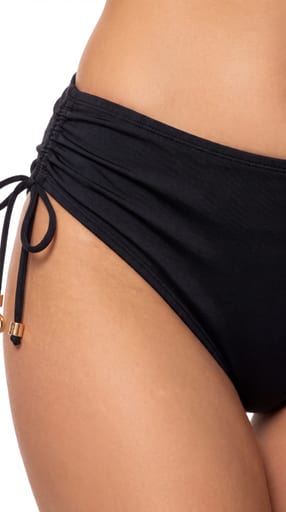
Makro detalu i konstrukcji
Studyjne makro jako dowód jakości: koronka, ścieg, fiszbina, splot, krawędź, okucie i napięcie tkaniny na ciele. Cała paczka jest warstwą detalu — 7–8 kadrów makro i półmakro plus kadry orientujące, w jednym grabiącym świetle i na jednym neutralnym tle.
Gotowy, aby rozbudować swoją bibliotekę kreacji?
Dodaj ten styl do swojego konta i zacznij tworzyć lepsze kampanie w kilka minut.