

Makro detalu i konstrukcji
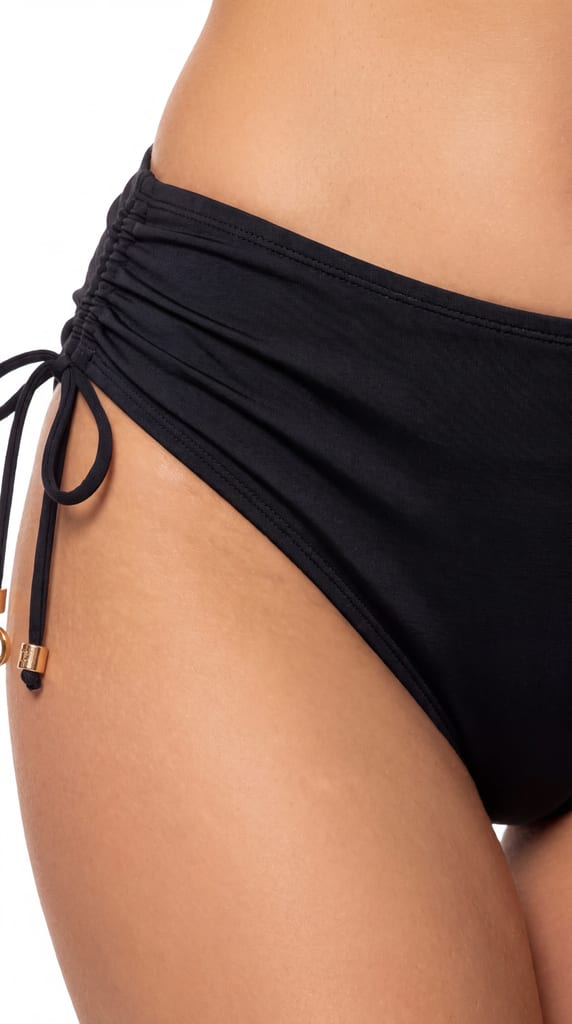
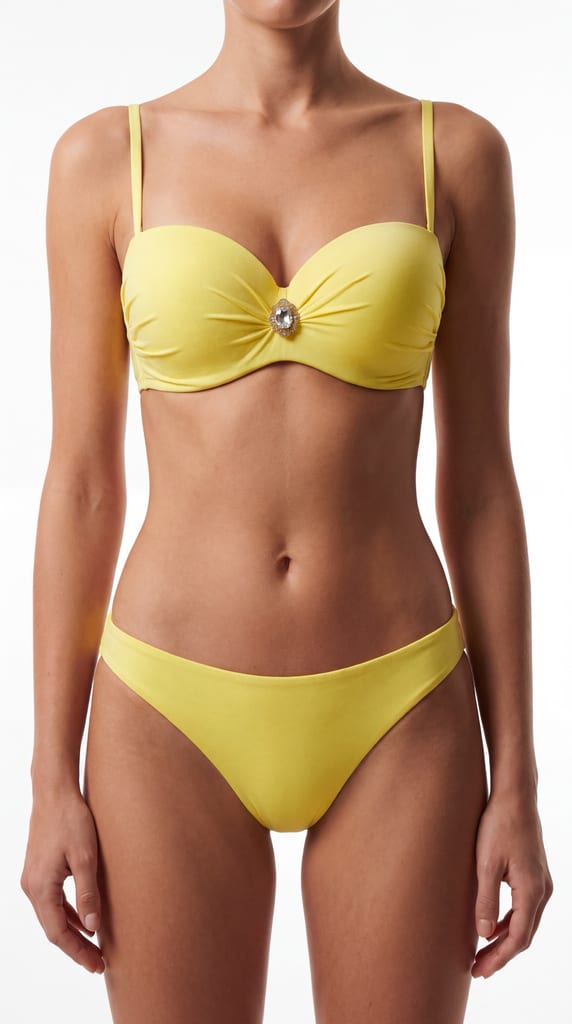
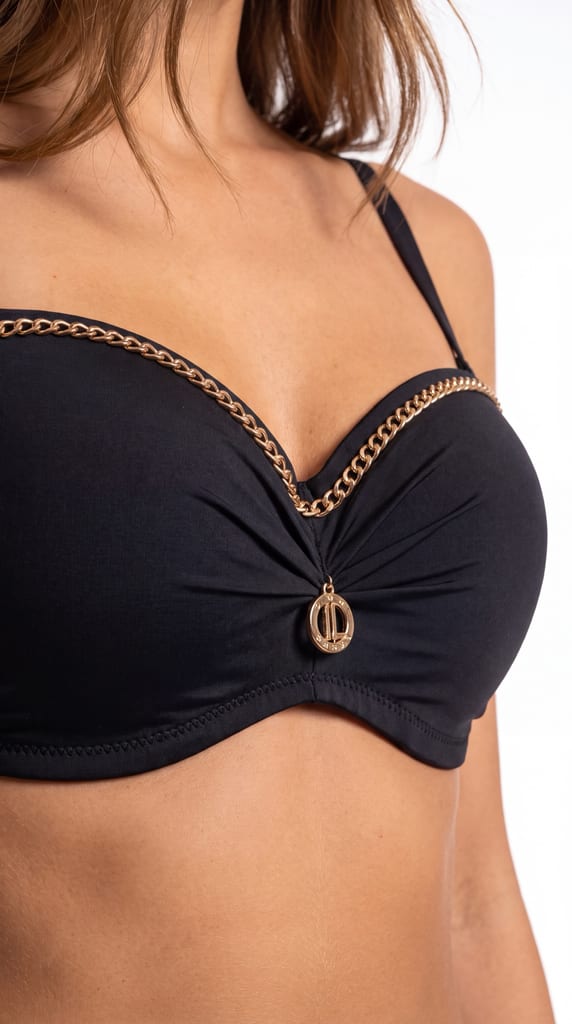
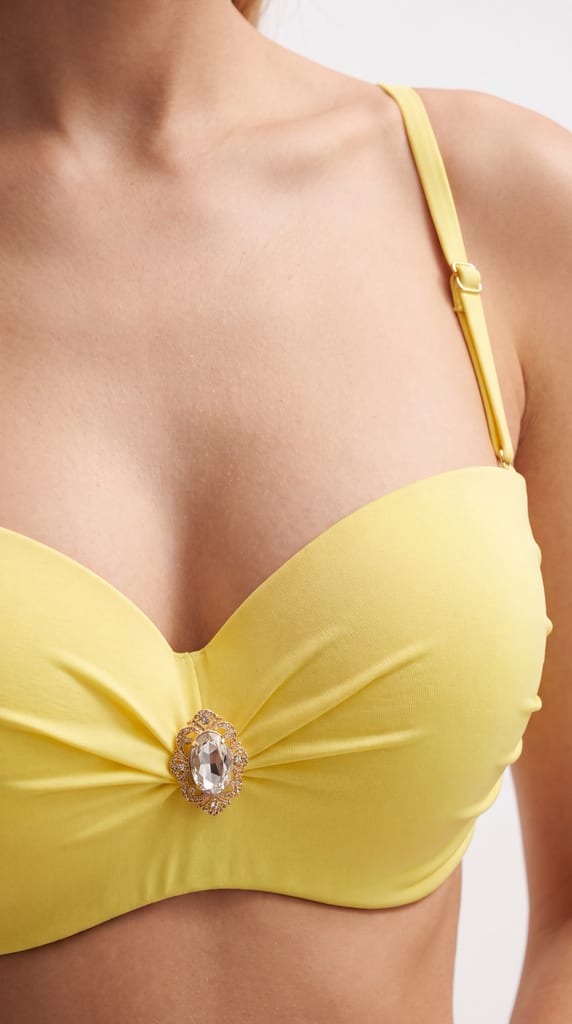
Studyjne makro jako dowód jakości: koronka, ścieg, fiszbina, splot, krawędź, okucie i napięcie tkaniny na ciele. Cała paczka jest warstwą detalu — 7–8 kadrów makro i półmakro plus kadry orientujące, w jednym grabiącym świetle i na jednym neutralnym tle.
Klient nie może dotknąć produktu przed zakupem — ten styl pokazuje dokładnie to, co sprawdziłby palcami. Grabiące światło wydobywa splot, koronkę, ścieg i wykończenie krawędzi, a produkt zostaje na ciele, więc widać skalę i prawdziwe napięcie tkaniny. Cała paczka jest warstwą detalu: siedem–osiem kadrów makro i półmakro plus dwa–trzy kadry orientujące, które mówią, gdzie na sylwetce ten detal siedzi.
Galeria
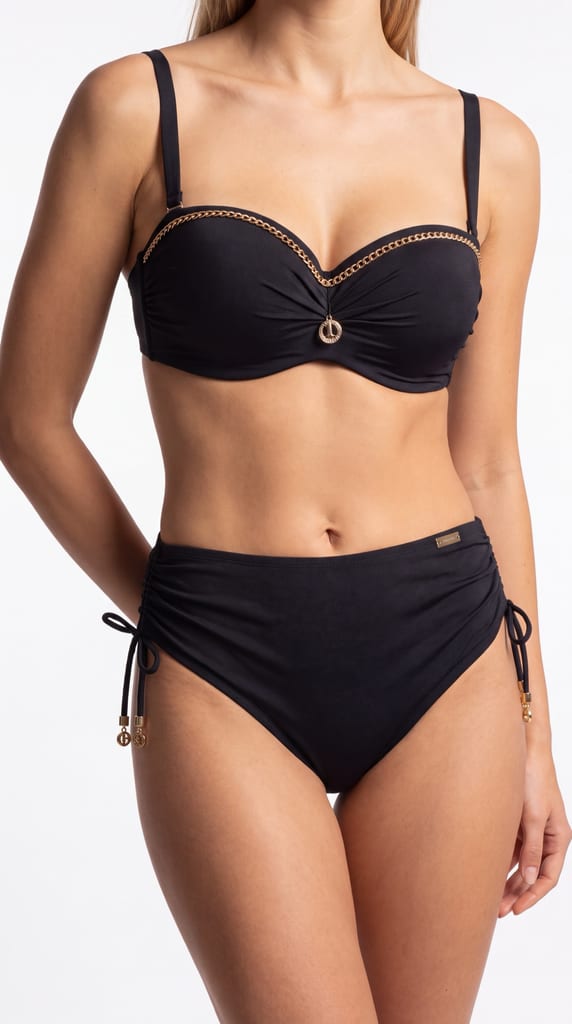
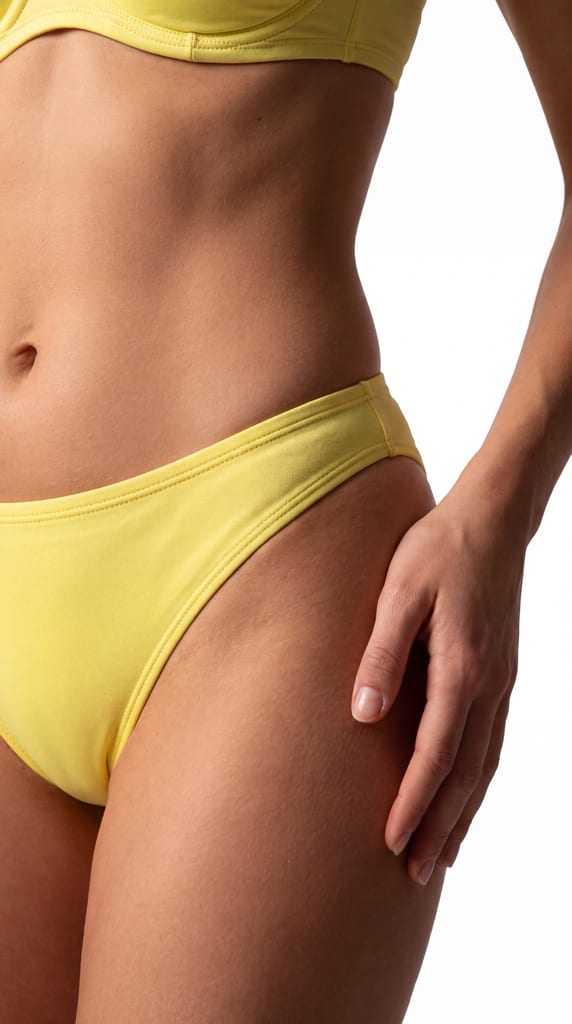
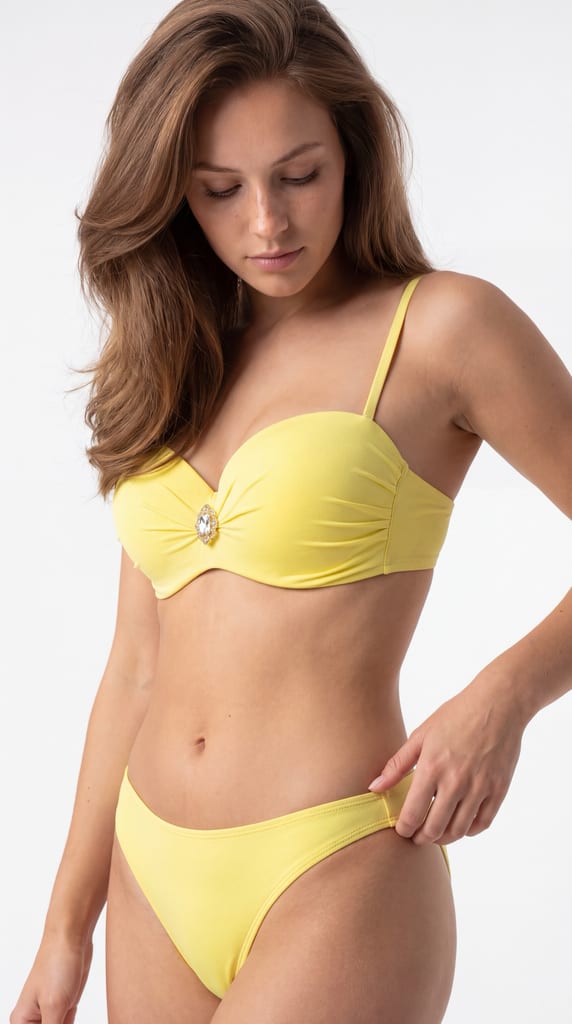
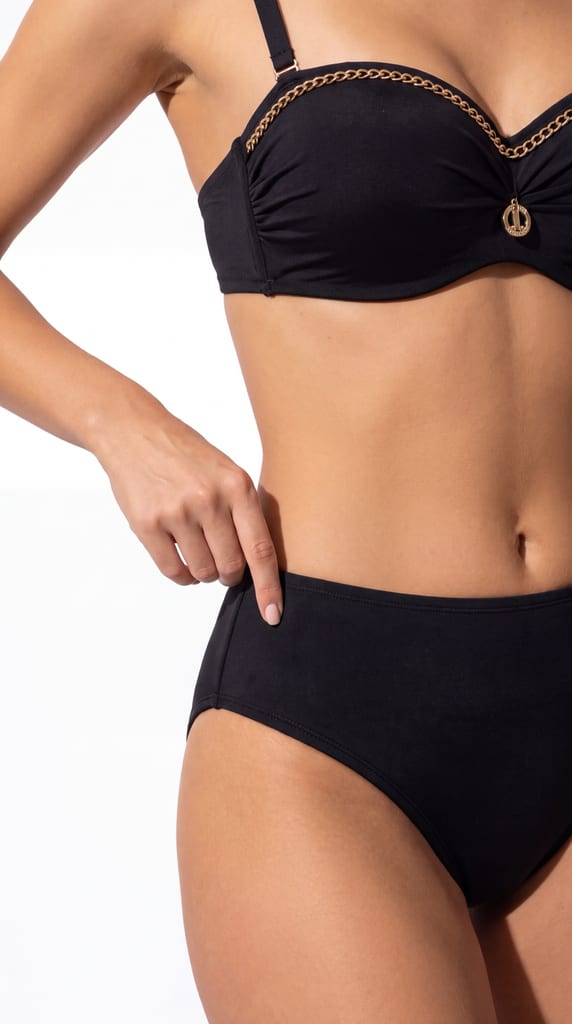
Najlepsze do
Najlepszy jako uzupełnienie galerii karty produktu (rząd detali obok zdjęć fitu), jako materiał do demo sprzedażowego i jako dowód jakości wykonania tam, gdzie cena wynika z konstrukcji: koronka, hafty, fiszbiny, taśmy i ich wykończenia, mocowania ramiączek, okucia, klejone szwy. Działa dla bielizny i swimwear; najmocniej dla marek, które konkurują jakością materiału i wykonania, a nie ceną.
Wymagania wejściowe
Wgraj packshot tej strony produktu, którą chcesz udokumentować — sesja fotografuje jedną stronę (przód ALBO tył); tył, czyli zapięcie, taśma i mocowania ramiączek, to osobny wsad i osobna sesja. Modelka jest wymagana: ciało niesie skalę i napięcie tkaniny, a bez niego ten styl traci swoją jedyną przewagę nad flat-layem. Sceneria nie jest potrzebna — styl ma własne, ciche neutralne tło studyjne; jeśli podepniesz swoją, to ona poprowadzi miejsce, a dyscyplina światła i kamery zostaje. W kadrach makro sceneria i tak jest rozogniskowana, więc realnie zmienia tylko kadry orientujące.
Wytyczne jakościowe
## Quality guidelines ### Style core A studio detail register for lingerie and swimwear, photographed macro and semi-macro on the garment as it is worn — images that document how the product is built. The world is a controlled studio: one quiet mid-neutral field, one broad key used at a grazing angle so it draws every stitch, scallop, weave and edge into relief, one pinned focal length and one closed-down aperture, and a still body whose only job is to carry the garment at its true scale and under its true tension. The subject of a frame is not the garment as a whole but a defined piece of it: a lace motif and its scalloped edge, a seam and its stitch, a boning channel, an underwire casing, a strap junction, a hook-and-eye column, an elastic band and how it is finished, a bonded seam, a tie end, a ring or slider. The register is technical and material-first, executed to a premium standard: this is what a customer would check with their fingers if the product were in their hands. It is decidedly NOT a campaign, NOT an editorial and NOT a fashion session with a detail frame attached — the whole pack is the detail layer. - Commerciality level: `catalog` with a documentary-technical accent — proof of build quality for a product page and a sales conversation, never campaign, never editorial - Dominant character: precise, tactile, material-first, quiet, controlled, craft-led - Image priority: the product's construction and material lead every frame; the body is present as the carrier of scale and fabric tension; facial expression is secondary and in most frames outside the crop entirely - Directional references: textile and atelier documentation, the material close-up row of a premium lingerie product page, quality-proof photography of a built object, museum raking-light surface documentation applied to a worn garment - Style-anchoring words: construction as the subject, raking relief across the weave, fabric under real tension on a real body, macro on a body and never a swatch, one quiet neutral field ### Product role in frame The product is not merely the hero here — a defined fragment of it is the entire subject of the frame, and the frame exists to prove how that fragment is made. What the customer buys in this category is construction: stitch density and regularity, how a lace edge is finished, whether a band is bound or raw-cut, how a strap is anchored and adjusted, how a boning channel is stitched down, how hardware sits against fabric, how a bonded seam is laid, how a sheer panel meets an opaque one. The body makes two things possible that a packshot on a table cannot: real scale (a stitch read against the curve of a rib means something; a stitch read against nothing does not) and real load (an elastic band compresses slightly where it crosses the body, a seam follows a body line, a panel stretches where the body fills it). Both are part of the proof and both are wanted. When the garment's own hue sits close to the model's skin tone (nude, blush, ivory, tan), the raking key and the neutral grade must preserve the edge between fabric and skin — at this magnification the edge IS the subject, and a dissolved edge destroys the frame entirely. - Product role: hero at maximum — one defined construction or material element is the whole subject of each macro frame; the body carries it and never competes with it - Visibility level: `detail` is the dominant mode — the element being read is fully legible edge to edge; the orienting frames complete the pack by showing where on the silhouette that element sits - What the style exposes (lingerie): lace motif, scalloped and picot edges, embroidery, mesh and tulle panels, power-mesh, underwire casing, boning channels, cup seaming, the gore, band and its elastic finish, hook-and-eye columns, strap sliders, rings and junctions, leg-edge elastic, gusset seam, trims and bows - What the style exposes (swimwear): bonded and flatlock seams, elastic leg binding, tie ends and their finish, rings, sliders and clasps, underbust bands, ruching and gathers, textured fabrics (rib, crinkle, jacquard), lining edges, mesh inserts - Scale and tension: every frame carries a human scale cue — the curve of the body under the fabric, or an edge of the body at the frame's border — and the load the body puts into the garment reads wherever fabric spans the body; where the subject is a closure or a piece of hardware, the load reads at its anchor instead of across a span. This is the preset's whole advantage over a flat table shot - Skin-to-garment separation: when the garment's hue is close to the skin tone, the grazing key and the neutral grade keep every edge of the garment readable against the body; the outline of a band, a scallop, a strap or a hem stays visible - Acceptable obscuring: none over the element being read — no hair, no hand, no crop edge across the construction in focus; a hand may work the fabric BESIDE it - Product presentation character: technical, honest, craft-proud, quiet — the surface is shown as it is, never staged and never dressed up ### Light Default light — applied when no scenery is linked, or when the linked scenery does not name a directional light, a time of day or weather: one broad, soft-edged studio panel used at a grazing angle, at ~75° azimuth off the camera–detail axis, well to one side, so the beam crosses the surface laterally instead of arriving from the lens's direction, and at ~20° elevation above the plane of the fabric it crosses (the azimuth is measured from the camera–subject axis; the elevation is measured against the surface being photographed, not against the room or the eye line, because the detail zones sit at different heights on the body — the source always stays above that plane, never below it). The only fill is one broad, low bounce on the shadow side, set roughly two stops under the key: enough that the unlit half of the construction keeps its detail, never enough to lift the relief the grazing angle draws. Discipline — always, whatever the light source: one dominant directional source arriving at a grazing angle to the surface, so that every stitch, fiber, scallop, ridge and edge casts its own small shadow and reads in relief; medium-high contrast; one white balance per frame, following the resolved light source (the preset's neutral value applies only when the default light is the source). This grazing discipline is a character of the preset applied on top of whichever source wins, so it survives a qualifying scenery that names its own direction — a linked scenery may set WHERE the light comes from, the preset keeps the grazing, texture-drawing CHARACTER. The source is broad and soft-edged on purpose: the relief comes from the ANGLE, not from the hardness of the source. A hard point source at the same angle burns the specular on satin, elastic and metal hardware and erases the very surface the frame exists to show. - Source type: studio, controlled; one broad soft-edged panel at a grazing angle, plus one low bounce as the only fill - Default source direction: ~75° azimuth off the camera–detail axis, to one side, and ~20° elevation above the plane of the fabric it crosses — applied when no scenery is linked, or when the linked scenery does not name a directional light, a time of day or weather - Hardness: a broad source at a grazing angle — soft-edged shadow transitions carrying hard-drawn micro-relief; the angle does the work, not a point source - Light-to-shadow contrast: medium-high — pronounced relief across weave, stitch and edge, while dark fabric keeps its internal structure and never turns into a flat void - Role of fill: one broad low bounce, about two stops under the key, holding detail in the shadow half of the construction without flattening the relief - Shadow quality: the shadows that matter here are millimetre-scale — the shadow a stitch throws across the weave, the shadow under a lace scallop standing off the skin, the shadow in the groove of a boned channel. Body-scale cast shadow is incidental - Specular behaviour: highlights on satin, elastic and metal hardware are held and keep their form; a blown highlight erases the surface the frame is about - Color temperature: neutral; the preset's neutral white balance applies only when the preset's default light is the source; accurate skin tones and, above all, accurate garment color - What the light should model: the surface relief of the textile first (weave, lace, stitch, edge), then the built structure beneath it (channels, casings, junctions), then the curve of the body that gives the surface its scale - Light discipline (always, whatever the source): one dominant directional source arriving at a grazing angle to the surface, drawing micro-relief; medium-high contrast; held speculars; one white balance per frame ### Color and tonality Neutral, exact and quiet — this register makes a claim about a specific textile, so the garment's own hue, the true value of its thread and the true tone of its hardware are the most protected values in the frame. The default background (used only when no scenery is linked) is ONE mid neutral grey field — sRGB #9A9A9C ≈ CIELAB L* 64 / a* 0 / b* -1 — a plain studio tone with a soft falloff, chosen so that both ends of the category palette separate against it: it sits below most skin tones and below ivory, blush and white lace, and clearly above deep blacks. It is NOT the bright near-white of a catalog seamless, NOT pure white, NOT the mid-light grey of the campaign studio, NOT beige and NOT cool-blue. Saturation natural and true — nothing muted, nothing pushed. Contrast medium-high, carried by the grazing light rather than by the grade. No tint, no creative grade, no film character: the tonality stays out of the way so the material reads exactly. - Palette: neutral and restrained — true garment color + real skin + the quiet grey field (#9A9A9C only when no scenery is linked); the garment is the only strong hue in frame - Background tone (default, closed axis): sRGB #9A9A9C ≈ CIELAB L* 64 / a* 0 / b* -1 — one single value with a soft falloff, never a family, never a range, never drifting lighter, darker, warmer or cooler between frames - White balance: neutral; follows the resolved light source; the preset's neutral value applies only when the preset's default light is the source; the grade never recolours a linked scenery - Saturation: natural and true-to-product; no muting, no boosting — a thread's colour is a claim about the product - Contrast: medium-high, produced by the grazing light; the grade itself stays neutral - Exposure: precise, set on the lit face of the construction; speculars on satin, elastic and hardware held with their form intact; the shadow half kept open enough to read - Highlights character: controlled and neutral, always keeping surface structure - Shadows character: deep but structured — the micro-shadow that draws the relief is the point, so it stays defined rather than crushed - Blacks: honest and readable — a black lace or a black bonded seam keeps its internal detail and its edge against the grey field - Whites: clean and neutral — an ivory or white garment separates from the #9A9A9C field by tone and by the contact of light and shadow, never by recolouring the background - Overall tonal character: neutral, exact, contemporary studio; deliberately invisible - Faithfulness of the garment's own hue takes precedence over everything else in this section ### Lens and perspective feel One pinned focal length: PIN ~85mm in feel — one single value for the entire session, no ranges (never write "50–85mm in feel") — held identically on every frame, from the tightest macro to the orienting frames, so proportions and geometry stay constant across the pack. Magnification comes from the working distance, not from a change of focal length: the camera is a short-portrait prime that focuses close, brought right up to the garment for the macro frames and pulled back along the same axis for the orienting ones. A wider length is used ONLY when the idea explicitly calls for it, never as a per-frame default. Aperture and depth of field are a closed axis resolved once for the whole session: ONE moderately closed value, ~f/11 in feel. At macro working distance depth of field collapses to millimetres, and f/11 is the value at which the whole detail plane — the full width of a lace band, a seam running away from the lens, the curve of the fabric over the body — holds sharp from edge to edge, while staying short of the point where diffraction begins to soften the weave. It is deliberately deeper than a campaign aperture and deliberately not fully closed. Neither the focal length nor the aperture is ever sourced from the scenery. Because the plane of focus is thin, the camera is kept square to the detail plane in the majority of frames; the distribution of angles lives in `Perspective mix`. - Focal length: PIN ~85mm in feel — one single value for the entire session, no ranges (never write "50–85mm in feel"); magnification comes from the working distance - Aperture / depth of field: ONE moderately closed value (~f/11 in feel) for the whole session; the detail plane sharp edge to edge; never sourced from the scenery - Camera distance: close working distance for the macro frames (the garment fills the frame), medium for the semi-macro frames, medium to medium-far for the orienting frames — all at the same pinned focal length - Perspective: the sensor plane kept parallel to the detail plane as the standing rule, so the whole plane falls inside the thin depth of field; oblique and near-tangential views are deliberate, minority devices for showing the height of the relief - Background rendering: at macro distance the field behind the body falls into a smooth, quiet blur even at this aperture — the locked grey never becomes a subject; in the orienting frames the same aperture leaves it a plain, softly graded plane - Sharpness character: precise and real — the sharpness of a real lens at close focus, where the weave resolves because the light draws it, not because the image was crisped - Gear character: a full-frame camera with a short-portrait prime focused close, controlled studio strobes — a working product studio, rendered true-to-life - Aspect ratio: no rigid requirement; the prompter picks (product galleries usually 2:3 / 4:5); the format should let a construction line run across the frame with room to read ### Composition language The frame is built around one construction line and filled by material. The element being read is placed with clear geometric intent and given a direction: a seam, a band edge or a strap crossing the frame is a compositional axis, and a diagonal is the default because it keeps the whole line inside the thin plane of focus while giving the eye a route. The garment occupies the majority of the frame area in every macro and semi-macro frame — the crop is anchored on the construction, not on a body region. At the same time every frame keeps at least one human scale cue: the curve of the body under the fabric, or an edge of the body at the border of the frame (a shoulder line, a collarbone, the rise of a rib, the curve of a hip). Without that cue the image degenerates into a fabric swatch and the preset loses its only advantage over a packshot on a table. One plane: the detail against the body that carries it, with the quiet studio field appearing only past the body's edge. Negative space is low by design — the frame is dense with material. Repetition is the graphic device of this register: a row of hooks, a run of scallops, a rhythm of stitches, a repeat in a jacquard. - Frame type: leads with macro frames (one construction or material element filling the frame) and semi-macro frames (a garment zone in body context); orienting frames (waist-up or 3/4-length) are the supporting minority - Object placement: the construction line placed with clear geometric intent, most often as a diagonal; a self-contained element (a complete lace motif, a slider, a bow) read centrally - Frame fill: the garment occupies the majority of the frame in macro and semi-macro frames; the crop is chosen by where the construction runs - Scale cue: a human scale reference is present in every frame — the curve of the body under the fabric or an edge of the body at the frame's border - Negative space: low — material fills the frame; the quiet field appears only at the edges, past the body - Symmetry: incidental; where the construction itself is regular (a hook column, a scallop run, a jacquard repeat) its rhythm is used as the graphic structure of the frame - Open / closed composition: mostly open — the construction line continues past the crop, which is what tells the viewer the frame is a detail of something larger; closed frames hold a self-contained element complete inside the border - Number of planes: one — the detail against the body; no foreground elements, no layered depth, no environmental framing - Separation from background: the grazing key plus the tonal distance between garment, skin and the #9A9A9C field; never a rim-light effect, never background recolouring - Room for copy: not a goal of this style; a usable margin is incidental - Overall composition character: material-dense, geometrically deliberate, documentary ### Pose language Posing here is a technical operation: the body's job is to present the surface carrying the construction to the lens as flat and as steady as it naturally can, and to hold the garment at its true tension. A shoulder rolls forward to bring a strap junction square to the camera; the torso turns so a side seam runs down the frame; an arm lifts clear of an underbust band; the body settles so a leg-edge elastic sits as it truly sits. The stance is held and precise. The garment must read as it genuinely fits: the pose neither stretches it past its real fit nor lets it slack into a drape it would not have. Hands stay clear of the element being read and may work the fabric beside it as material proof — a finger hooked under an elastic band so its give reads, a fingertip lifting a lace edge so its scallop stands clear of the skin, a thumb at a hook-and-eye. Expression is secondary throughout: in the minority of frames where the face enters the crop it stays calm, composed and quiet, giving the pack a human anchor and a sense of scale without ever becoming the subject. - Expression: calm, composed, quiet, secondary — reads only in the orienting frames where the face enters the crop; never worked, never played to the camera - Pose dynamics: static and held — set positions chosen for what they present to the lens; small adjustments only, and only where they change how the fabric loads - Body openness: whatever brings the detail plane square to the camera; the surface being documented decides the stance - Line tension: low and true — natural posture; no elongation, no sculptural overload - Posing character: technical / product-serving — the body is the mount that holds the garment at real scale and real tension - Fabric tension: the pose sets it and it must stay honest — the garment sits as it truly sits on that body, with no invented pull, no hidden tuck and no falsified drape - Hands: clear of the construction in focus; may work the fabric beside it as material proof (a finger under an elastic, a fingertip lifting a lace edge, a thumb at a closure) - Eye contact: applies only in the orienting frames — quiet off-camera, a downward look along the body toward the garment, or one calm direct look as an anchor - Spontaneity level: fully controlled — every position is set - Body-to-product relationship: the body serves the product absolutely; nothing in the stance exists for its own sake ### Movement and physics The style is static by design. There is no walking, no turning, no hair device and no flowing-fabric device: movement adds nothing to a surface that has to be read and costs the sharpness the whole register depends on. Everything is frozen and sharp, with no blur anywhere. What the style does care about is material physics, and it cares about it precisely: the fabric behaves under real gravity and real elasticity. An elastic band under true tension compresses the surface it crosses very slightly, and that small, real deformation is part of the proof and is wanted. A seam follows the body line it was cut for. A stretch panel opens its weave a little where the body fills it. Lace lifts off the skin where its scallop is unsupported and lies against it where it is. The garment is never rendered as though it were laid flat on a table, and it is never pinned, tucked or clipped into a shape it would not hold on a body. - Static vs movement: static — set positions, held; no motion devices of any kind - Frozen vs blur: fully frozen and sharp; no motion blur anywhere, least of all on the garment - Fabric physics: real gravity and real elasticity — true tension, true compression where a band crosses the body, true lift where lace is unsupported, true drape where it is not - Hair/body: settled and kept clear of the construction being read - Elements: none — no wind, no water, no environmental devices ### Relation to scenery The style's world is a plain, quiet studio field, and that field is the preset's own default rather than a location statement. The default background (used only when no scenery is linked) is the ONE mid neutral grey defined in `Color and tonality` — sRGB #9A9A9C ≈ CIELAB L* 64 / a* 0 / b* -1 — with a soft falloff: a silent, non-narrative plane whose only job is to stay out of the way of a surface being read at close range. A linked scenery owns the location and backdrop when the user supplies one, and the preset's grazing light discipline, its camera pins and its detail-first framing then apply on top. Worth knowing operationally: in the macro frames a scenery is largely invisible anyway, because at that working distance everything beyond the body falls into a smooth blur — a scenery changes this pack mostly in the two or three orienting frames. This style is at its best without one: a quiet field is what the register wants. - Relationship to space: a plain, quiet neutral studio plane by default; a linked scenery leads the location when supplied - Scene depth: flat — one plane behind the body, soft falloff; no layered depth - Background activity: none — the default field is silent, and at macro distance it is strongly defocused - Space scale: no space is depicted; the frame is about a surface and the body under it - Default background: the mid neutral grey #9A9A9C (CIELAB L* 64 / a* 0 / b* -1) — one value, not a range, not a family; used only when no scenery is linked - What a linked scenery brings: the place and the backdrop, and — when it names a directional light, a time of day or weather — the light source. What it never brings: focal length, aperture / DoF, render character or grade; those stay preset-owned, and the grazing light discipline always applies on top of whichever source is resolved ### Props and styling behavior The style carries no props and no accessories at all, and this is stricter than in the library's other studio registers for a physical reason: at this magnification any second object becomes a competing subject, and a single ring on the hand working the fabric can be larger in the frame than the closure it is meant to demonstrate. So no jewelry — not even on a hand in frame — no eyewear, no headwear, no held objects, no set dressing and no furniture. Bare feet are the default, and footwear appears only when the product context requires it. The only object in any frame is the garment. Hair sits settled and stays clear of the construction being read; where the product sits high on the body, hair goes over the shoulder away from straps and bands. The preset does not specify the model's skin, make-up or hair — these come from the casting card (Mannequin input) and the preset must not override them. - Accessories: none — the frame carries the garment and nothing else - Props: none — no environmental or styling objects, no surfaces, no set elements - Jewelry: none, including on a hand that works the fabric — at this magnification a ring becomes a second subject - Footwear: bare feet as the default; footwear only when the product context requires it - Hair: settled, kept clear of the construction being read and of the garment's edges - Hair, make-up and skin come from the card; the preset only asserts non-override (it does not smooth, restyle or beautify them) - Avoid (Prompter instruction — formulate final values positively): added objects, set dressing, a hand resting over the construction, hair falling across the element in focus — anything that puts a second subject into a frame that has one ### Post-production and finish Finish exact, quiet and material-true — the image should read as a precisely executed studio photograph of a real textile, not as a graded creative asset. No grain: this is a clean digital studio capture at low ISO. Clarity medium-high, but carried by the grazing light rather than by post-production: the weave, the stitch and the edge finish read because the light draws them, so the frame needs no contrast boost, no sharpened "advertising" micro-contrast and no resolution or quality tokens. Retouch minimal, and in this register the restraint has a specific target: the fabric's own small irregularities — a slub in the weave, the slight unevenness of a hand-finished edge, the fine fibers standing off a lace scallop, the tiny variation in stitch spacing — are evidence that this is a real textile and are preserved rather than cleaned away. Where the guidelines name satin, mesh, tulle, jacquard or rib, those are fabrics on the product; they are never descriptions of the model. No vignette. Colour exact: the garment's hue, its thread and its hardware as true as the file allows. - Grain: none — clean digital capture - Texture: the fabric's and the body's real texture preserved and fully legible; the textile's own irregularities kept as evidence - Clarity: medium-high, produced by the grazing light — no contrast boost, no sharpened advertising micro-contrast, no resolution or quality tokens - Vignette: none - Retouch: minimal — light cleanup only, never at the cost of weave, stitch, edge finish or skin texture - Skin: the preset does not specify the model's skin, make-up or hair; it only requires that the render not smooth away or override the skin realism and identity supplied by the Mannequin input - Overall finish: exact, quiet, material-true, deliberately invisible ### Style render properties - Render character: true-to-life photographic rendering. The frame must read as a real photograph taken with a real camera in a real studio — a full-frame camera, a short-portrait prime focused close, controlled studio strobes. Carry this into `Rendering_Style` as its own value — `True-to-life photographic rendering.` — and resolve it identically on every frame of the session. The detail register belongs in `Session_Concept` and `Output_Goal`; `Rendering_Style` carries ONLY the photographic character, never a genre label, never a quality or fidelity adjective. - The subject of each macro and semi-macro frame is ONE defined construction or material element of the garment — a seam, a boning channel, an underwire casing, a strap junction, a hook-and-eye column, an elastic band and its finish, a bonded seam, a lace motif and its scalloped edge, a weave or a jacquard repeat. The crop is anchored on that element and the garment occupies the majority of the frame. - Every frame is macro ON A BODY, never a fabric swatch: a human scale cue is present in all ten frames — the curve of the body under the fabric, or an edge of the body at the border of the frame — together with the visible tension the body puts into the garment. This is the preset's only advantage over a flat table shot and it is never given up. - Light must read as ONE dominant directional source arriving at a GRAZING angle to the surface — by default a broad, soft-edged panel at ~75° azimuth off the camera–detail axis and ~20° elevation above the plane of the fabric it crosses, with one low bounce about two stops under it as the only fill. Every stitch, fiber, scallop, ridge and edge casts its own small shadow and reads in relief. The source stays broad, so the relief comes from the angle and not from a hard point. This grazing discipline, the medium-high contrast and the one-white-balance-per-frame rule apply on top of whichever light source is resolved. - Specular highlights on satin, elastic and metal hardware are held and keep their form — a blown highlight erases the surface the frame exists to show. - White balance follows the resolved light source and stays accurate in skin tone; the preset's neutral white balance applies only when the preset's default light is the source, and each frame resolves to exactly one white balance. Contrast medium-high and produced by the light; the grade itself stays neutral and never recolours a linked scenery. - The default background (used only when no scenery is linked) reads as ONE mid neutral grey studio field — sRGB #9A9A9C ≈ CIELAB L* 64 / a* 0 / b* -1 — with a soft falloff; never a brighter near-white, never pure white, never beige, never cool-blue, and never a different value between frames. When a scenery is linked, the scenery owns the background. - Focal length is PINNED at ~85mm in feel and aperture at ~f/11 in feel for the whole session — one value each, never a range, never taken from the scenery. Magnification comes from the working distance, not from a change of focal length. - Depth of field is subordinate to the readability of the detail plane: the camera is kept square to the surface being photographed in the majority of frames so the whole plane falls inside the thin zone of focus; where a plane cannot be held, the frame is recomposed rather than the aperture opened. - The garment's own hue, its thread colour and its hardware tone stay exact and are never falsified by grade, light or background; the grade never recolours a linked scenery. - When the garment's hue is close to the skin tone (nude, blush, ivory, tan), the grazing key and the neutral grade keep every edge of the garment readable against the body — the garment never dissolves into the skin. - Fabric physics stay real: true gravity, true elasticity, true compression where a band crosses the body, true lift where lace is unsupported. Nothing is pinned, tucked or pulled into a shape the garment would not hold on a body. - The pose is static, held and technical — the body presents the surface to the lens and holds the garment at its true tension; hands stay clear of the element in focus and may work the fabric beside it. Expression is secondary and in most frames the face is outside the crop. - The preset does not specify the model's skin, make-up or hair; it only requires that the render not smooth away or override the skin realism and identity supplied by the Mannequin input. - No props, no accessories and no jewelry appear in any frame — at this magnification a second object becomes a competing subject. - The session documents the one side of the product supplied in the input; the whole pack keeps that side toward the lens. - Overall the image must feel like a precise studio document of how one specific garment is built, read at close range on the body that wears it — quiet, exact and tactile — not a campaign frame, not an editorial close-up and not a flat-lay of fabric. ### Allowed variability Variability applies only to the open axes. What stays disciplined across frames is the preset's own DNA: the #9A9A9C field default, the grazing broad-source light character with its azimuth and elevation, the pinned ~85mm focal and ~f/11 aperture, the neutral exact grade, the clean digital finish, the static technical pose register, the garment-fills-the-frame rule, the human scale cue and the readability floor of the element being read. Everything below is open. - Which construction or material element is the subject may change between frames — seam, channel, casing, junction, closure, band, edge finish, lace motif, weave, panel meeting. - Which zone of the body carries it may change (shoulder and strap, bust and cup, ribcage and band, waist, hip, leg edge, back closure), within the loaded side of the product. - Magnification may move along the ladder (macro ↔ semi-macro ↔ orienting) through the working distance — always at the pinned focal length and the pinned aperture. - The direction the construction line runs through the frame may change (diagonal, vertical, horizontal, or a self-contained element read centrally). - The camera's angle to the detail plane may vary within the tolerance set in `Perspective mix`, as long as the plane being read stays inside the depth of field. - Whether a hand or fingertip works the fabric as material proof, and where, is open — always beside the element in focus, never over it. - Whether the quiet studio field is visible past the body's edge, and how much of it, is open. - The stance may vary within "the surface is presented squarely and the garment sits at its true tension"; in the orienting frames the gaze may alternate as set in Quantity. - What may NOT vary: the background value, the light character, the focal length, the aperture, the fill-the-frame rule, the human scale cue, the identity of the garment being documented, or the readability of the element in focus. ### Session-level consistency Across the whole pack these stay constant, because the Prompter is stateless: the same ONE mid neutral grey field default (#9A9A9C — never a different value between frames) whenever no scenery is linked, the same grazing broad-source key with the same relation to the surface it crosses (~75° azimuth, ~20° elevation above the fabric plane) and the same low bounce as its only fill, the same single white balance per frame, the same neutral exact grade with medium-high contrast, the same pinned ~85mm focal length and ~f/11 aperture on every frame, the same clean digital finish without grain, and the same static technical pose register with quiet secondary expression. One thing more is specific to this preset and load-bearing: the pack documents ONE garment, so the lace motif, the weave, the thread colour, the stitch character and the hardware must be identical in all ten frames — this pack is a claim about one specific product, and a motif or a finish that changes between frames destroys the claim entirely. Magnification deliberately varies along the macro-to-orienting ladder; nothing else about the render varies with it. Ten images must read as one examination of one garment on one body under one light — a material dossier, not ten close-ups from different days. ### Conflict resolution Default hierarchy, unchanged — this is a proof-of-build register and the default hierarchy is exactly its identity: 1. Readability and fidelity of the construction and the material: the element in focus fully legible edge to edge, its true colour, its true stitch, its true edge finish; nothing covers it. 2. Realism and render believability: true-to-life photographic rendering, real fabric physics and honest tension, real skin from the card (non-override), true proportions at the pinned focal length. 3. Consistency of the technical world: one light character, one camera pair, one background value, one garment, one register across the pack. 4. Any graphic accent — the relief-led, near-abstract crop — permitted only inside the margins left by 1–3. When a linked scenery's own space conflicts with the preset's default studio field, the scenery wins the location (below product readability, render realism and model identity, which stay higher). The preset's default light and background apply for sessions without a scenery, or when the linked scenery does not name a directional light, a time of day or weather; a qualifying scenery's light leads, and the preset's grazing light discipline applies on top. The focal and aperture pins are never overridden by the scenery — only a per-batch Idea or suggestion may move them. If the detail plane will not hold sharp across the frame, the frame is recomposed so the plane sits parallel to the sensor, or the magnification is reduced — the aperture pin does not bend to buy depth of field. If a crop would remove every human scale cue and leave a frame that could have been shot on a table, the crop is pulled back until the curve or edge of the body re-enters, even at the cost of magnification. This preset exists because the garment is worn. If the grazing angle would blow the specular on a satin, elastic or hardware surface, the key is broadened or the exposure held so the surface keeps its form — relief never wins over the surface it is meant to reveal. If a pose or gesture would improve the frame at any cost to the readability of the element being documented, readability wins; in this register there is no trade the construction loses.
Wytyczne ilościowe
## Quantity guidelines ### Session goal By default 10 images in the pack. Main use: the detail row of a product gallery (the close-ups that sit beside or beneath the fit frames), sales demo material where build quality is the argument, and material or craft claims on a product page for lingerie and swimwear. The pack's goal is a complete detail layer for ONE loaded product side: seven to eight frames that document how the garment is made, read at close range on the body that wears it, plus two to three orienting frames that tell the viewer where on the silhouette those details sit. The pack is designed to complete a gallery whose fit frames come from a catalog session — it is a layer, not a substitute for one, and it never turns into a fashion session with detail frames attached. ### Shot mix About 40% macro (one construction or material element fills the frame: a seam and its stitch, a boning channel, an underwire casing, a strap junction, a hook-and-eye column, an elastic band and its edge finish, a bonded seam, a lace motif and its scallop, a weave or jacquard repeat), 35% semi-macro (a garment zone in body context: a cup and its band, a hip line and its side seam, a strap crossing a shoulder blade, a leg edge across the thigh, a back closure with the band running out of frame), 25% orienting frames (waist-up or 3/4-length showing where on the silhouette the documented details sit). Roughly seven to eight of ten frames are therefore macro or semi-macro — this proportion IS the preset, and the wider frames never grow into a fashion session. Every frame at the pinned 85mm, the magnification coming from the working distance. When the input shows the product's back, the same shot mix reads from behind (the back closure and its column of hooks, the band and its elastic finish, the strap junction and slider at the back, the rear panel's seaming, and orienting frames of the back on the body). ### Perspective mix Product orientation = input, not preset. The input always shows one side of the product — the front or the back — and that loaded side dictates which surfaces of the garment are available to document and whether the model is posed facing the camera or with her back to it. The preset does NOT redistribute or assign this (no "X% front / Y% back"); it takes the orientation from the input and only varies the camera angle within it. The distribution concerns the camera setup with the loaded side kept to the lens, and in the detail frames it is governed by the thin plane of focus: about 50% square to the detail plane (the sensor plane parallel to the surface being photographed, so the whole element falls inside the depth of field — the standing rule of the register), 15% a slight oblique swing off the surface normal, enough to show that the structure has height and layers while the plane still holds sharp, 10% a near-tangential view along the surface (a lace scallop standing off the skin, the ridge of a boned channel, the thickness of a bound edge — accepting that the far end of the line falls soft, because the height of the relief is the subject of that frame), and 25% the orienting frames at eye level to the body zone in question. The first three shares together are the 75% of macro and semi-macro frames set in `Shot mix`, and the fourth is its 25% of orienting frames. Angles never rotate the body so the loaded product side leaves the frame, and never deform proportions in the orienting frames. ### Gaze distribution The face is outside the crop in roughly seven to eight frames of ten, so for most of this pack gaze has no subject. This section therefore governs two things: what replaces gaze in the frames without a face, and how gaze behaves in the few frames where the face does enter. Frames without a face (about 75% of the pack) — reading direction replaces gaze. What a gaze does in a portrait pack, the direction of the construction line does here: it tells the eye where to enter the frame and where to travel. Of these frames, about 50% run the construction line as a diagonal across the frame (a seam, a band edge, a strap crossing a shoulder — a diagonal also keeps the whole line inside the thin plane of focus), about 30% run it as a vertical or horizontal axis (a hook-and-eye column, an underbust band, a leg binding), and about 20% present a self-contained element with no dominant direction, read centrally (a complete lace motif, a slider or ring, a bow, a bonded seam junction). In every one of them the grazing light crosses the line rather than running along it, so the light draws the structure instead of flattening it. Frames where the face enters the crop (about 25% of the pack — the orienting frames): about 55% a calm gaze off camera, about 30% a downward look along the body toward the garment (which also points the viewer at the zone the macro frames document), about 15% one calm direct look to camera as a human anchor for the pack. All of them stay quiet and composed; the face gives the pack scale and a human reference and never becomes the subject of the frame. ### Interaction distribution On a plain studio field there is nothing to touch, so the meaningful interaction axis of this preset is between the body and the garment, not between the body and an environment. About 60% still, load-bearing presence (the body simply holds the garment at its true tension and nothing moves — the base state of the pack), about 30% a hand or fingertip working the fabric as material proof (a finger hooked under an elastic band so its give reads, a fingertip lifting a lace edge so its scallop stands clear of the skin, a thumb at a hook-and-eye, a hand smoothing a panel so the weave lies open to the light), about 10% a small self-adjustment that changes how the fabric loads (a shoulder rolled forward, an arm lifted clear of a band). Environmental interaction is 0% by default; when a scenery is linked, any contact with it stays incidental and never becomes the subject. In every gesture frame the hand works BESIDE the element in focus, never over it. ### Product visibility distribution About 40% construction detail (the built structure fills the frame: a seam and its stitch, a boning channel, an underwire casing, a strap junction, a hook-and-eye column, an elastic band and its finish, a bonded seam, a slider or ring), 35% material detail (the textile itself: a lace motif and its scalloped edge, a weave, a rib, a jacquard repeat, a sheer panel meeting an opaque one, the fabric's tension across the body), 25% the garment readable on the body in an orienting frame (where on the silhouette the documented detail sits). This split is by SUBJECT, not by magnification — both the macro and the semi-macro frames may carry either a construction or a material subject. There is no partial-obscuring share in this preset: nothing ever covers the element being read. ### Composition openness distribution About 60% open frames, where the garment and its construction line continue past the crop — in a detail register openness is what tells the viewer this is a fragment of something larger, and it is a consequence of the crop rather than a narrative device. About 40% closed frames, which is the sum of two groups: the roughly 15% of the pack where a self-contained element is held complete inside the border (a whole lace motif, a full hook-and-eye column, a cup and its band — the same frames that `Gaze distribution` reads centrally), and the 25% of orienting frames where the figure is composed inside the frame. ### Safe vs expressive ratio About 80% safe (instantly readable, gallery-ready detail — a store could drop any of them into a product page and the customer would understand what is being shown), 15% expressive (relief-led, graphically strong crops that read almost as abstract structure while staying unmistakably identifiable as this garment's construction), 5% copy-ready at most (an incidentally quieter area of the field a store may use for a badge — never a designed layout zone; the layout-first register lives in another preset). Expression here means "more graphic", never "less readable". ### Spatial and depth mix About 60% the detail plane against the body's own surface as its immediate ground (the studio field far out of focus or entirely outside the frame), 15% the detail read at the body's edge with the quiet grey field visible beyond it as a smooth blur, 25% the orienting frames with the figure against the neutral field with its soft falloff. There is no layered depth and no environmental plane in this pack: the depth that matters is millimetres deep and lives inside the construction itself — the height of a scallop above the skin, the groove of a channel, the thickness of a bound edge. ### Recurring motifs or accessories frequency No props and no accessories — 0/10 by design, jewelry included. The recurring motifs are the preset's own discipline and its proof mechanism: the grazing relief drawn across the textile in 10/10 frames; a human scale cue — the curve of the body under the fabric or an edge of the body at the frame's border — in 10/10; the same one garment with the same lace motif, the same weave, the same thread colour and the same hardware in 10/10; the #9A9A9C field, the pinned 85mm and the ~f/11 aperture in 10/10. The garment filling the majority of the frame in the 7–8/10 macro and semi-macro frames. Fabric tension read across a span of the body in roughly 8/10 (in the remaining frames the subject is a closure or a piece of hardware, where the load reads at its anchor instead). A hand or fingertip proving the material's give in roughly 3/10. The recurring theme of this pack is evidence — light, scale and tension — not added elements. ### Energy mix About 70% calm and technical (still, precise, documentary — the register's home), 20% quietly close (the proximity and the presence of the body read in the frame while the register stays composed and the construction stays the subject), 10% stronger (a high-relief, graphically confident hero detail that could open a gallery row). Nothing in this pack rises to campaign energy and nothing is active: there is no motion in this register at all, and its strength is precision.
Wskazówki dla użytkownika
Wybierz modelkę. Wgraj packshot jednej strony produktu. Nie podpinaj scenerii, jeśli chcesz spokojne, neutralne tło. Generuj 8–10 zdjęć — ta paczka ma być całą warstwą detalu, nie pojedynczym kadrem.
Rób
Używaj tego stylu obok sesji fitowej, a nie zamiast niej — detal sprzedaje wtedy, gdy klient widział już fason. Wybieraj produkty z realną konstrukcją do pokazania: koronka, hafty, fiszbiny, wiązania, okucia, klejone szwy, wykończone krawędzie. Uruchamiaj bez scenerii, żeby tło zostało ciche. Konkretny element do udokumentowania (zapięcie, mocowanie ramiączka, krawędź nogawki) wskaż w sugestiach sesji — sugestie są nadrzędne nad stylem. Generuj 8–10 zdjęć naraz.
Nie rób
Nie oczekuj pełnej sesji modowej — kadry szersze są tu wyłącznie orientujące i jest ich dwa–trzy na dziesięć. Nie oczekuj zdjęć produktu bez ciała: to nie flat-lay, napięcie tkaniny na ciele jest sensem tego stylu. Nie oczekuj portretów ani ekspresji — twarz jest poza kadrem w większości ujęć, a mimika jest tu drugorzędna. Nie proś o dramatyczne światło ani mocne kąty: czytelność płaszczyzny detalu wygrywa z każdym efektem. Nie licz na przód i tył z jednej sesji. Nie generuj bez modelki.
Powiązane style
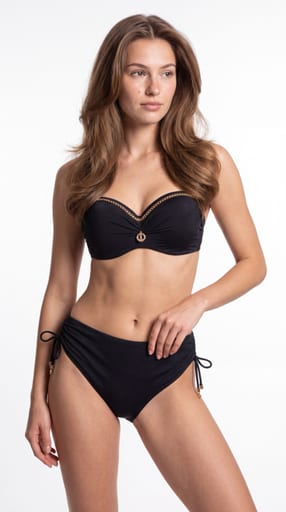
Czysty fason PDP
Czysty katalogowy styl PDP: modelka na jasnym neutralnym tle, kontrolowane światło, pół-statyczna poza. Fit, proporcje i konstrukcja produktu przed nastrojem — powtarzalna siatka zdjęć na kartę produktu.
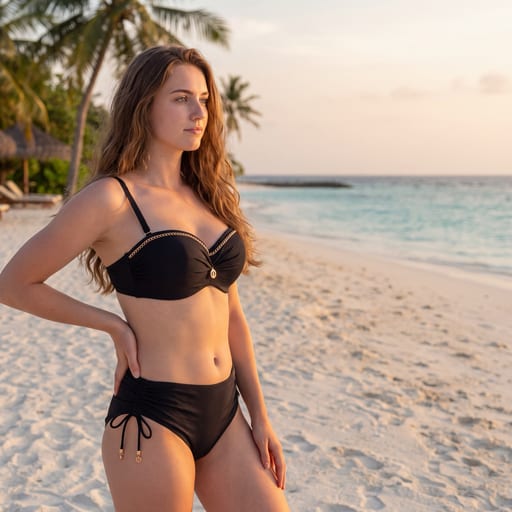
Hero z miejscem na tekst
Kadr projektowany pod layout: sylwetka po jednej stronie klatki, druga strona zostaje cicha i pusta — realne miejsce na nagłówek, CTA albo logo. Jasne, ciepłe tło studyjne, kontrolowane światło i pełna czytelność produktu w części kadru przypadającej modelce.
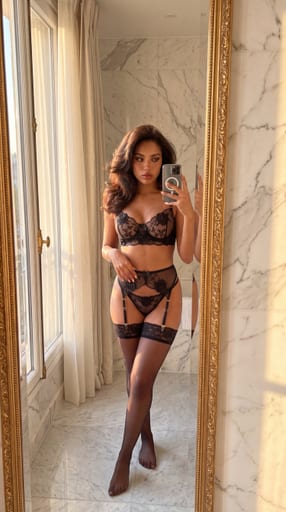
Natywny social w lustrze
Natywne treści social: pionowy kadr 4:5, lustro, telefon w dłoni i światło zastane prywatnego wnętrza. Zdjęcia wyglądają jak zrobione przez samą modelkę — ale są ostre, prawidłowo naświetlone i pełnowymiarowe, bez fejkowych artefaktów telefonu.
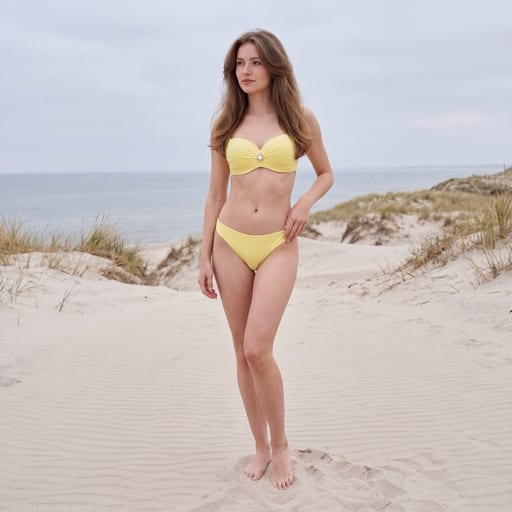
Wyblakły brzeg
Wyblakły słońcem, spokojny brzeg morza jako jeden świat dla całego katalogu: ten sam piasek, to samo zawoalowane światło, ta sama ogniskowa, ta sama cisza. Produkty różnych marek zaczynają wyglądać jak jedna sesja — a kolor każdego produktu zostaje wierny.
Apartment Hi-fashion Poses
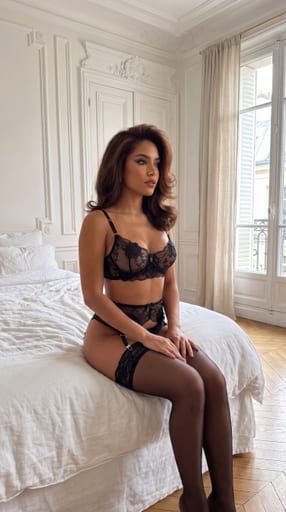
Bielizna w cichej sypialni
Spokojna, prywatna sypialnia w miękkim świetle jednego okna — rejestr quiet-luxury dla bielizny premium. Intymność bez glamouru: wyciszona poza, pozy leżące i naturalna relacja z meblem, len i blady tynk zamiast buduarowej scenografii.
Gotowy, aby rozbudować swoją bibliotekę kreacji?
Dodaj ten styl do swojego konta i zacznij tworzyć lepsze kampanie w kilka minut.