

Golden Hour Editorial
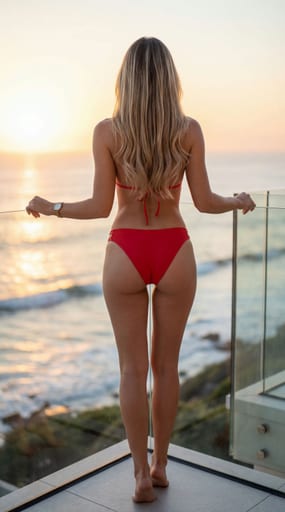
A warm, sunlit editorial look for swimwear and lingerie shoots. Low golden light, film-like color, shallow depth of field — magazine-ready frames in one session.
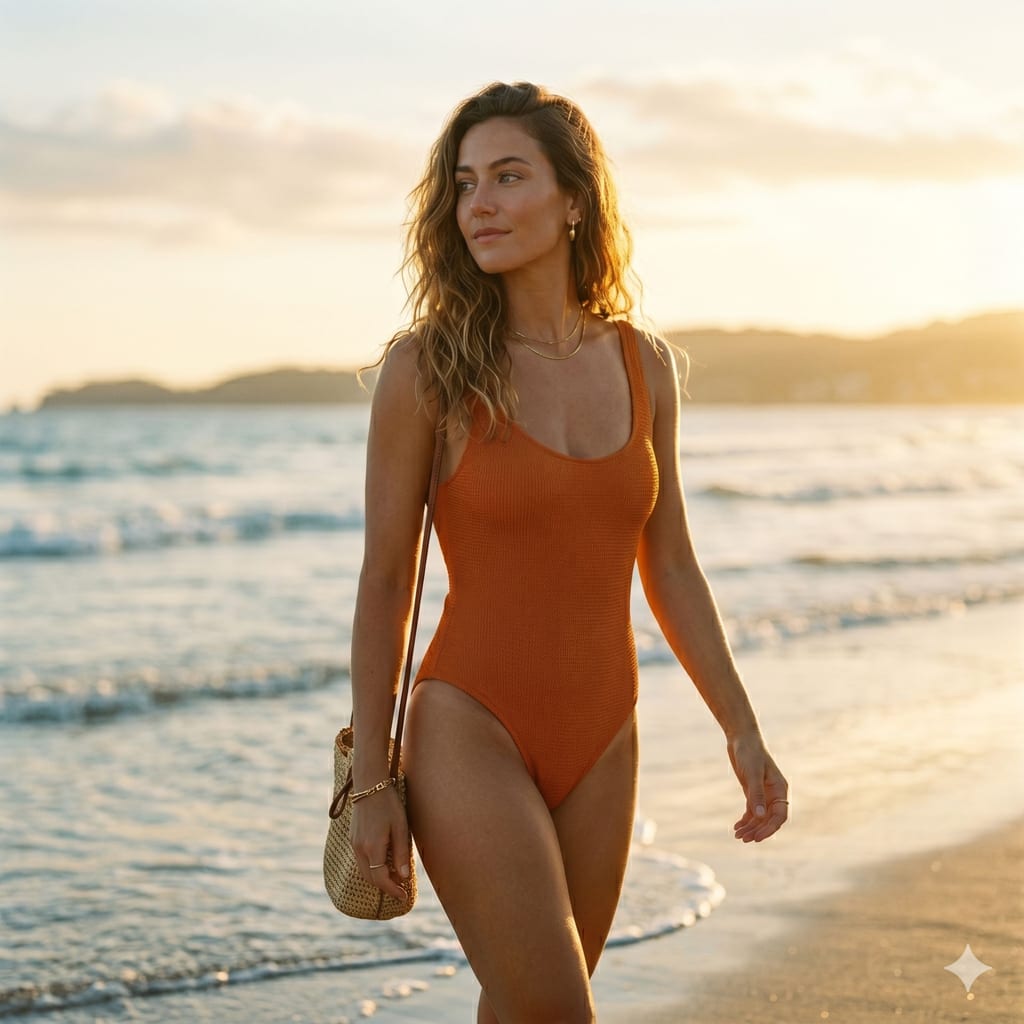
Galeria
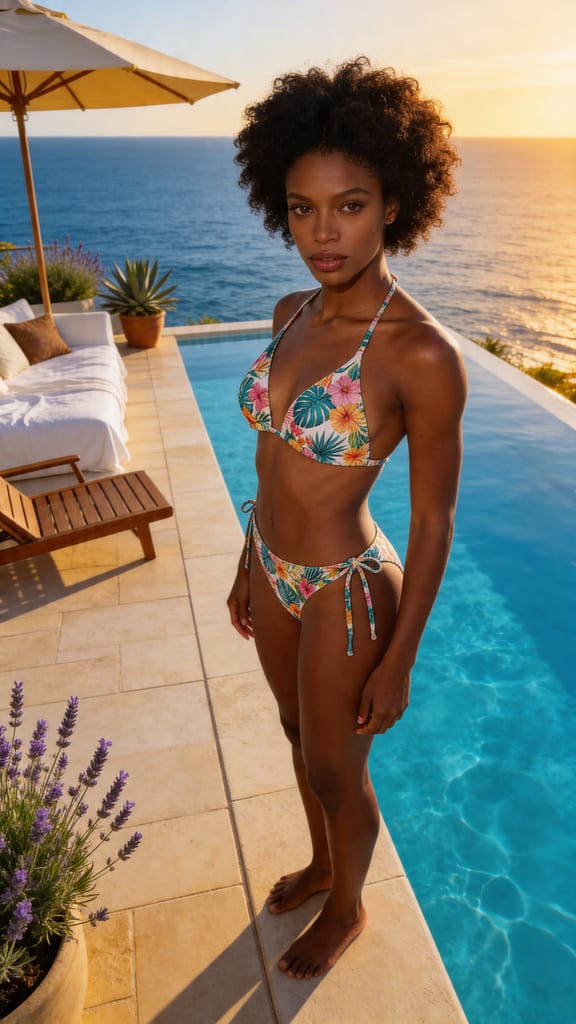
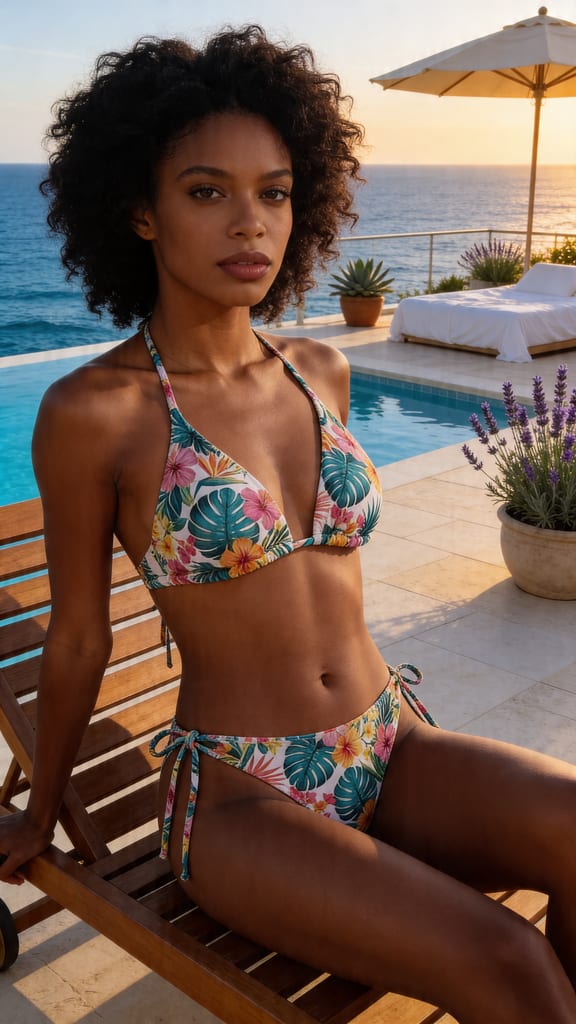
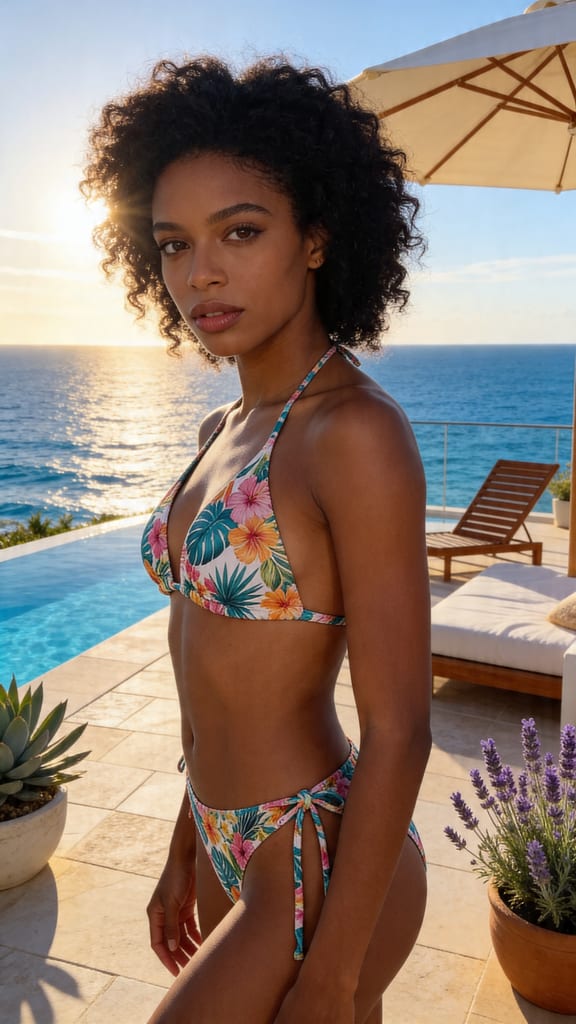
Najlepsze do
Swimwear and beachwear campaigns, lingerie and intimates lookbooks, resort-wear editorials, fragrance and beauty cross-shoots, and lifestyle landing pages that need a warm, cinematic mood. Pairs best with scenery that carries natural low light — beaches, pools, terraces, balconies, sunlit bedrooms, desert, Mediterranean exteriors.
Wymagania wejściowe
Provide a clean product photo of the swimwear or lingerie piece (flat, on ghost-mannequin, or packshot) and a model reference that matches your brand. Scenery input should be a location with natural low-sun potential — avoid overcast or harsh-midday references, they fight this style's DNA. Higher-resolution inputs yield sharper fabric texture and cleaner skin rendering.
Wytyczne jakościowe
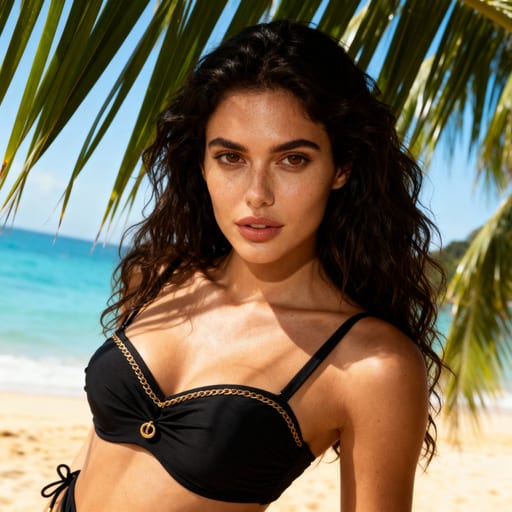
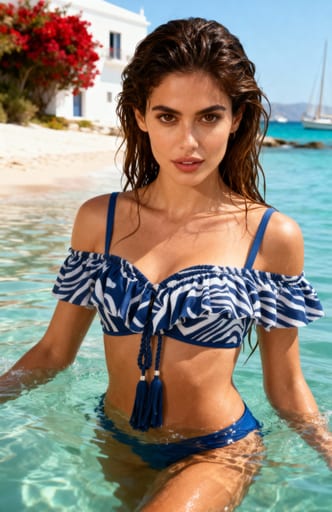
Warm cinematic golden-hour light as the defining aesthetic. Low sun angle (15 to 25 degrees above horizon) producing long, soft, directional shadows and a honey-amber glow that wraps the subject. Backlight or three-quarter backlight is the default: rim-light on shoulders, hair, and fabric edges; gentle flare is welcome when it flatters the frame, never when it washes out the skin or product. Color palette: warm amber, peach, coral, and soft rose highlights; cool teal, dusty blue, and deep magenta shadows for a subtle complementary push. Skin tones stay true-to-life, never orange, never waxy — warmth comes from the light, not from saturation. Fabric colors read richer and slightly warmer than in neutral light but remain recognizable. Contrast: medium, film-like. Soft shoulder on highlights (no clipped whites), open shadows with visible detail, preserved mid-tone separation. A very gentle grain is acceptable — never digital noise. No HDR look, no over-sharpening, no crushed blacks. Rendering: shot on a medium-format camera with a fast prime lens — 50mm, 85mm, or 135mm equivalent — at f/1.8 to f/2.8. Shallow depth of field, creamy background separation, round bokeh. Tack-sharp focus on eyes when the model faces camera; on the garment's key detail (strap, waistband, seam) otherwise. Motion is relaxed, never frozen — micro-blur on hair and light fabric is desirable. Composition: editorial fashion rules — rule of thirds for vertical subjects, negative space weighted against the sun direction, leading lines from architecture or horizon. The product is always clearly visible and well-lit; the style never hides the garment in shadow. Crops vary: full-body, three-quarter, portrait, detail. Post-processing: subtle warm film emulation, slight lift in the shadows, gentle roll-off on highlights, a touch of bloom on specular highlights only. No vignette heavier than -0.3 EV. No split-tone that breaks skin tones. Output as high-resolution, low-compression, ready for editorial layout.
Wytyczne ilościowe
Produce 5 to 7 frames per session, sequenced like a magazine editorial. Each frame must contribute a distinct narrative beat — no redundant crops of the same pose. 1. **Opening full-body wide** — subject centered or on a third, environment clearly readable, golden backlight defining the silhouette. Sets location and mood. 2. **Three-quarter portrait** — waist-up or mid-thigh-up, the product framed and lit, eye contact with camera or soft middle distance. The "look" frame. 3. **Walking / motion frame** — the subject in relaxed movement (walking, turning, stepping into water, adjusting a strap), slight motion in hair or fabric. 4. **Candid off-camera moment** — subject looking away, laughing softly, eyes closed in sunlight, at rest. Feels observed, not posed. 5. **Detail / texture close-up** — garment-focused: strap, clasp, seam, embroidery, fabric weave against skin, with shallow focus and golden rim-light. 6. **Environmental wide with backlight flare** — subject smaller in frame, sun behind, atmospheric. Hero-editorial shot for landing pages. 7. **Optional — low-angle or alternate perspective** — taken from below or from the side to break rhythm; reserved for when the scenery supports it (water line, horizon, architectural element). Lighting direction, color temperature, and film look stay coherent across the entire set — the frames read as one shoot, same hour, same roll.
Wskazówki dla użytkownika
Choose this style when you want warm, magazine-cover energy on a swimwear or lingerie line — resort drops, summer campaigns, honeymoon edits, boudoir capsules. It softens bodies flatteringly, flatters skin tones of every range when set correctly, and makes garment colors read rich without oversaturation. Avoid pairing it with starkly lit studio scenery — the style expects directional sunlight. For flat studio looks use a different preset. Combine with a scenery that has a horizon or window to give the backlight somewhere to come from.
Rób
- Pair with scenery that has natural directional light — beach at sunset, pool at dusk, balcony morning, sunlit bedroom - Use model references where skin tone and posture will complement warm light - Include garment close-ups in the shoot plan to make the most of the rim-light on fabric - Keep product colors that earthy, warm, or jewel-tone palette where possible — amber, coral, sand, olive, deep navy, emerald
Nie rób
- Don't use with harsh overhead studio scenery — the style will fight it and look artificial - Don't expect cool-toned clinical renders; this style is committedly warm - Don't layer a second strong color grade on top in post — the look is already graded - Don't use for hard-packshot / catalog e-commerce where the product must sit on white — use a studio-packshot preset instead
Powiązane style
Gotowy, aby rozbudować swoją bibliotekę kreacji?
Dodaj ten styl do swojego konta i zacznij tworzyć lepsze kampanie w kilka minut.